

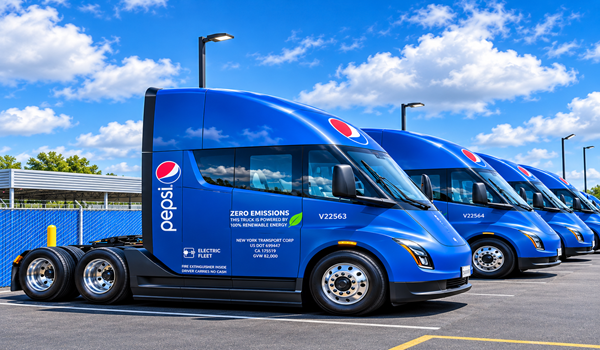
PepsiCo India has nearly doubled its fleet of electric freight trucks in just six months. The fleet has grown to 15 vehicles, and operations now run from three manufacturing sites instead of one, as the company steps up its move toward cleaner logistics.
The programme began in March 2026 with eight retrofitted electric trucks at the company’s Kosi plant in Uttar Pradesh. It has since been extended to Guwahati in Assam and Pune in Maharashtra. The larger fleet now covers an estimated 9 lakh kilometres a year, almost double the 4.8 lakh kilometres it covered at launch.
The company is also cleaning up the final leg of its delivery chain. It has electrified more than 950 three- and four-wheelers linked to its distributors across markets, helping cut emissions in last-mile transport.
The expansion is part of a wider push to shrink the carbon footprint of PepsiCo India’s supply chain. The company is working with technology providers, logistics operators and distributors to make that happen.
“At PepsiCo India, sustainability is embedded in how we operate and grow,” said Rinkesh Satija, vice-president, Supply Chain Operations, India and South Asia, PepsiCo India. He described the freight electrification drive as part of a larger commitment to building a cleaner, more efficient and future-ready supply chain.
The company calls its collaborative model the Partnership of Progress approach. It is designed to pool strengths from across the value chain, tackle operational hurdles and develop electric mobility solutions that work at scale.
Satija said the shift to electric freight takes more than new technology. “It calls for strong partnerships and collaboration across the value chain,” he said, adding that the company is bringing together technology providers, logistics partners, distributors and other stakeholders to find practical solutions.
Beyond transport, PepsiCo India is increasing its use of renewable and alternative fuels in manufacturing. Biomass now makes up 97% of the company’s fuel mix, a key step in its transition to lower-carbon operations.
These efforts fall under PepsiCo Positive (pep+), the company’s sustainability agenda, which aims to build sustainability into every part of its business and supply chain. PepsiCo India said it wants to show that greener logistics can work both operationally and commercially, and it hopes to encourage wider adoption across the industry.
The progress comes as companies in India face growing pressure to cut emissions from road freight, which remains one of the hardest parts of the supply chain to decarbonise. By scaling up from a single-plant pilot to a multi-site operation in less than a year, PepsiCo India is betting that electric trucks can move beyond trials and become a regular part of how goods move across the country.