

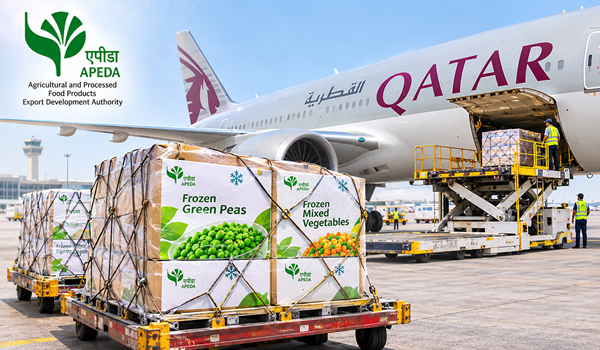
Farrukhabad has made its debut on the global frozen food map. The Agricultural and Processed Food Products Export Development Authority (APEDA) has flagged off the district’s first export consignment of frozen green peas and mixed vegetables, bound for Qatar.
The 63-metric-ton shipment, sent by M/s. Shri Lakshmi Frozen Foods, left Farrukhabad in Uttar Pradesh for Doha by way of Nhava Sheva Port. According to APEDA, it is the first such consignment from Farrukhabad to the Gulf market. For a district better known for traditional farming, it marks a clear step into value-added global trade.
APEDA Chairman Abhishek Dev flagged off the consignment virtually during a Stakeholder Dialogue held in Varanasi on November 20. The event brought exporters and several government agencies together to discuss the challenges and opportunities in agricultural and processed food exports.
APEDA called the export a significant milestone in diversifying Uttar Pradesh’s agricultural export basket, particularly in value-added and frozen food products. Officials said Farrukhabad and its neighbouring areas hold immense potential for vegetable production and processing, and that this potential is only now starting to reach international markets.
According to officials, the shipment shows how regional farm output can be linked with modern food processing facilities and international supply chains. Frozen vegetables, which keep their quality over long distances and longer storage periods, give producers in the hinterland a way to reach distant markets that fresh produce often cannot.
The impact is expected to go well beyond a single exporter. APEDA said the development should open new opportunities for farmers, Farmer Producer Organisations (FPOs), processing units and exporters across the region. Officials said the consignment is an important step towards widening both the range of products and the geographical reach of Uttar Pradesh’s agricultural exports.
The Varanasi dialogue also served as a forum for the practical concerns of exporters. Discussions covered export facilitation, packaging, logistics, market access, regulatory requirements and institutional support, which are the operational issues that often decide whether smaller and regional exporters can compete abroad.
APEDA officials responded to the concerns raised by participants. They promised support in tackling export-related challenges and said the agency wants more regional exporters to take part in international markets.
Dev stressed the need for coordinated efforts among exporters, FPOs, government departments and other stakeholders to make Indian agricultural products more competitive in global markets. He said no single player can achieve that on its own. Results depend on aligning production, processing, compliance and logistics from farm to port.
The Farrukhabad shipment comes as India keeps pushing to raise the share of processed and value-added goods in its farm exports, moving beyond raw commodities towards higher-value products. The Gulf region, with its heavy reliance on food imports, remains one of the most important destinations for Indian agricultural produce.
For Farrukhabad, the 63 tonnes headed to Doha may be only a beginning. But it is a meaningful one. It shows that the district’s fields, backed by the right processing and export infrastructure, can now supply consumers well beyond India’s borders.