

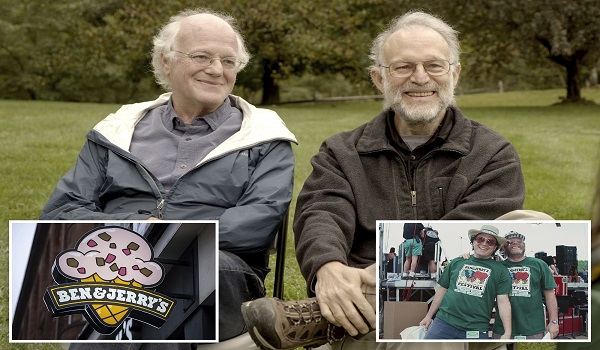
As Unilever prepares to spin off its global ice cream empire under the banner of The Magnum Ice Cream Company, a storm is brewing inside one of its most iconic brands. Ben Cohen and Jerry Greenfield, the maverick co-founders of Ben & Jerry’s, have issued an open letter demanding their brand be freed from corporate control and allowed to operate independently once again.
A Legacy at Odds with Corporate Ownership
Cohen and Greenfield, who sold the Vermont-born company to Unilever in 2000, argue that the deal was struck on a simple promise: Ben & Jerry’s would retain the freedom to champion social causes, from climate justice to peace activism. But they say that the promise has been broken.
According to the co-founders, Unilever has repeatedly “silenced” the brand—blocking public statements on political and humanitarian issues, including calls for a ceasefire in Gaza and criticism of former U.S. President Donald Trump. “We no longer believe Ben & Jerry’s can thrive as part of a conglomerate that fails to support its founding mission,” the duo wrote, urging Unilever to allow the brand to find socially aligned investors who would honor its activist DNA.
A Long-Running Feud
The dispute is not new. Ben & Jerry’s and Unilever have been locked in years of tension over governance and activism. The brand’s independent board has often clashed with the Anglo-Dutch giant, which it accuses of undermining both leadership and purpose. Most recently, Cohen and Greenfield criticized Unilever for ousting Ben & Jerry’s CEO, claiming he was removed for prioritizing the company’s social mission over corporate interests.
Unilever, however, denies the charges. In a statement, a spokesperson for The Magnum Ice Cream Company emphasized that Ben & Jerry’s remains “a proud part” of the portfolio—alongside Breyers, Talenti, Klondike, and other brands—and reiterated its commitment to the ice cream maker’s “three-part mission: product, economic, and social.”
The Business Stakes
The stakes are not merely ideological. Ben & Jerry’s is the leading ice cream brand in the U.S., generating nearly $951 million in sales in 2023, according to Statista. The U.S. ice cream market overall is valued at more than $19 billion, making the fight over the brand’s identity a battle with significant financial weight.
Meanwhile, the soon-to-launch Magnum Ice Cream Company—set to become the world’s largest ice cream business with $9.3 billion in revenue last year—is focused on efficiency and growth. It projects annual organic sales growth of 3% to 5% post-spinoff and plans sweeping supply chain reforms to cut costs.
Heritage vs. Scale
At its heart, the clash underscores a fundamental question: can a mission-driven brand like Ben & Jerry’s coexist inside a corporate giant designed to maximize shareholder value? Cohen and Greenfield don’t think so. For them, the brand’s quirky flavors and cult-like following are inseparable from its activism.
“That is not the Ben & Jerry’s that we founded, or the one that we envisioned when we agreed to join Unilever 25 years ago,” they lament.
Whether Unilever listens remains uncertain. For now, the Cherry Garcia maker sits at the crossroads of two futures—one tied to the machinery of the world’s biggest ice cream company, the other to the radical independence that first made it a household name.