

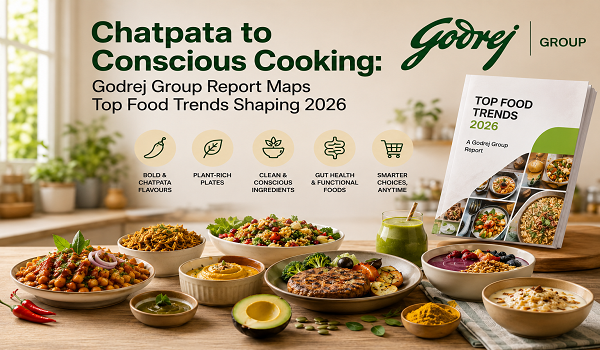
India’s evolving food landscape is being increasingly shaped by cultural storytelling, bold flavours, and changing consumption habits, according to the latest Godrej Food Trends Report 2026 (GFTR 2026), unveiled at Tasting India: Culinary Conversations in the capital.
Launched by Godrej Group at Vikhroli Cucina and presented during a three-day culinary gathering at Kunzum Bookstore, the report places “Stories” at the centre of food experiences—highlighting how provenance, cultural memory, and human connection are becoming key value drivers across the industry.
The invite-only event brought together chefs, authors, historians, and media professionals to discuss emerging consumption patterns and the deeper narratives shaping India’s culinary future. Notable participants included chef Manish Mehrotra, along with writers and historians such as Swapna Liddle and Sarla Razdan.
Commenting on the growing importance of narratives in food, journalist Sourish Bhattacharya noted that storytelling is fast becoming central to consumer engagement, transforming food from a functional necessity into an emotional and experiential journey.
Now in its ninth edition, the GFTR—recognised at the World Gourmand Awards—draws insights from over 200 industry voices, including chefs, nutritionists, entrepreneurs, and food writers. Since its inception in 2018, the report has played a significant role in forecasting trends that go on to influence India’s food and beverage sector.
Key Food Trends Defining 2026
1. Rise of Chatpata, Piquant Flavours
Indian consumers are leaning into bold, layered taste profiles, with “flavour collisions” and spice-forward innovations gaining prominence across categories.
2. Spotlight on Women Farmers
Produce from women-led agricultural enterprises is expected to gain visibility, driven by growing consumer interest in transparency, sustainability, and provenance-led storytelling.
3. Reinvention of Mithai
Traditional Indian sweets are undergoing a modern transformation, combining global techniques with local flavours to create multi-sensory, Indo-modern dessert experiences.
4. Shift to Savoury Protein Snacking
As fatigue sets in around sweet protein products, brands are pivoting towards savoury formats, with namkeen-inspired, protein-rich snacks emerging as a fast-growing segment.
5. Evolution of Smart Home Cooking
Home cooking is becoming more hybrid and efficient, blending pre-prepared elements with final-stage customization, allowing consumers to balance convenience with authenticity.
The report underscores a broader shift in how consumers perceive food—not just as sustenance, but as a medium of storytelling, identity, and connection—signalling new opportunities for brands to innovate beyond taste and tap into deeper cultural narratives.