

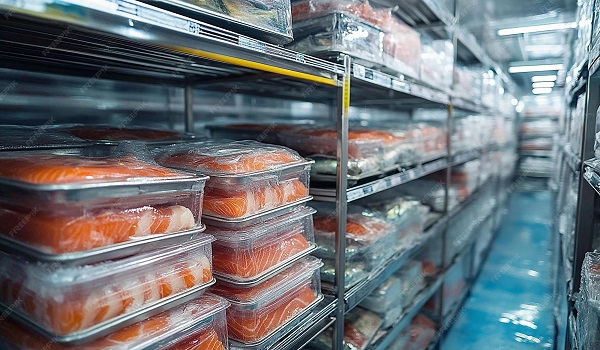
Rising consumer demand for fresh and natural food is driving a major transformation in India’s seafood supply chain, with the industry rapidly upgrading its cold chain infrastructure using advanced technologies such as artificial intelligence (AI) and the Internet of Things (IoT).
What was once considered a premium expectation has now become a baseline demand. According to a recent survey by GlobalData, 82% of consumers consider “fresh” or “natural” attributes important when purchasing food, while 81% say the same for organic products—underscoring a decisive shift in consumption patterns.
Industry experts say this change is forcing seafood producers, processors, and exporters to rethink traditional logistics systems that relied heavily on fragmented cooling methods and manual oversight.
“With consumers placing freshness at the core of their food choices, especially for seafood, legacy supply chains are no longer viable,” said Sainul Abidin, Consumer Analyst at GlobalData. “End-to-end cold chains powered by AI and IoT are becoming essential.”
The transformation is visible across the value chain—from improved onboard chilling systems in fishing vessels to temperature-controlled transportation, modern storage facilities, and faster processing units. Real-time monitoring and automation are increasingly being deployed to maintain consistent temperatures and reduce spoilage.
The shift is particularly critical for exporters, who must comply with stringent global standards on food safety, traceability, and temperature control.
On the policy front, the government is supporting this transition through schemes like Pradhan Mantri Kisan Sampada Yojana (PMKSY), which is funding integrated cold chain and value addition infrastructure. Coastal states such as Gujarat, Tamil Nadu, Andhra Pradesh, and West Bengal have emerged as key hubs for new cold storage and processing facilities located closer to fishing zones.
Additionally, the National Centre for Cold-chain Development (NCCD) has updated its 2025 guidelines to mandate sensor-based monitoring systems, alarm mechanisms, and energy-efficient refrigeration technologies across cold chain operations.
Private sector players are also playing a significant role. Technology firms like IIoTNext are deploying real-time monitoring systems across cold rooms, blast freezers, and even fishing vessels. Meanwhile, startups such as Captain Fresh are leveraging AI-driven demand forecasting and route optimisation to reduce wastage and improve supply-demand alignment.
Innovations such as solar-powered cold storage units are also being introduced in off-grid coastal regions, ensuring immediate chilling after harvest and preserving product quality.
However, challenges persist. Many small and artisanal fishing communities still face limited access to electricity, capital, and technical expertise required to adopt these advanced systems. Regulatory compliance across domestic and export markets also remains complex.
Looking ahead, the sector is expected to increasingly adopt blockchain-based traceability, predictive analytics integrating weather and logistics data, and scalable IoT solutions tailored for smaller operators.
As consumer expectations continue to evolve, industry stakeholders and policymakers alike will need to collaborate closely to ensure that India’s seafood supply chain can consistently deliver on the promise of freshness—from catch to plate.