

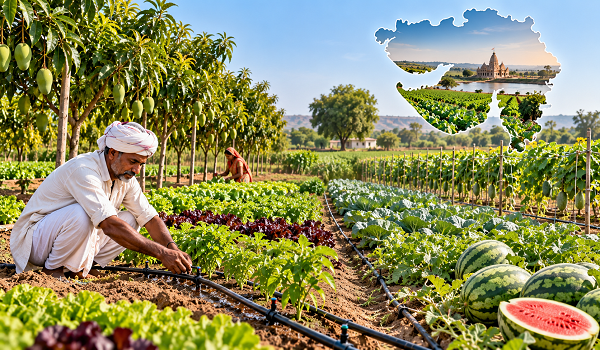
GHCL Foundation, the CSR arm of GHCL Limited, is expanding its sustainable agriculture and digital livestock management initiatives across rural Gujarat, with programmes currently reaching more than 40,000 farmers across 175 villages.
The Foundation’s agriculture interventions focus on organic and natural farming, water conservation, soil health, crop diversification and farmer capacity building. Alongside this, its partnership with Nitara is supporting technology-led livestock management, benefiting 48,287 livestock farmers through digital tools for animal health, breeding and productivity management.
Under its sustainable agriculture programme, 396 farmers have adopted organic farming practices, while 40,160 horticulture plants have been distributed to 1,413 farmers. The programme also promotes drip irrigation, soil testing, nutrient management, kitchen gardening and climate-resilient farming practices.
Farmers are provided with inputs such as solar light traps, vermicompost bags, anaerobic tubes and Jivamrut kits. Training programmes are conducted in association with Krishi Vigyan Kendra, Junagadh Agriculture University and agriculture experts to strengthen farmers’ technical knowledge.
According to the Foundation, these interventions have helped reduce the use of chemical fertilisers and pesticides, improve soil fertility, conserve groundwater and increase farm incomes. Several participating farmers have reported a 20-30 per cent rise in net income through crop diversification and sustainable farming practices.
Livestock management is another important component of the programme. Through the Nitara platform, farmers can maintain digital records of their cattle and receive alerts relating to vaccinations, breeding cycles and animal healthcare.
Services under the initiative include artificial insemination, pregnancy diagnosis, vaccination, deworming, mineral supplementation, balanced nutrition and disease detection through the California Mastitis Test.
GHCL Foundation is also supporting the programme by training local technicians, strengthening veterinary services and facilitating access to quality breeding inputs.
More than 7,000 farmers and 27,000 animals have been connected through the Nitara ecosystem, while over 13,000 animals were onboarded during FY 2025-26. The artificial insemination programme has achieved a conception rate of around 50 per cent.
The Foundation said early disease detection and preventive livestock management have helped reduce treatment costs, improve milk productivity and support dairy incomes.
In Nakhda village, farmer Bhimshibhai Arshibhai Solanki adopted drip irrigation and crop diversification, shifting from wheat to watermelon cultivation. According to the Foundation, his annual income increased from around Rs 50,000-60,000 to Rs 4 lakh, while water usage fell by 30-50 per cent.
In Ambaliyala village, Somatbhai Ranchodbhai Makwana transitioned from chemical-based farming to organic mango cultivation. He reported a reduction in cultivation costs of around Rs 9,000 per bigha and an increase in annual orchard income to approximately Rs 5.5-6 lakh, supported by premium pricing for organic mangoes.
The livestock programme has also supported dairy farmers such as Kinjal from Khamba village, with training focused on regular vaccination, animal-health monitoring and improved cattle management.
Through its combined agriculture and livestock initiatives, GHCL Foundation is seeking to improve farm productivity, strengthen resource efficiency and support more sustainable rural livelihoods through technology, training and better farming practices.