

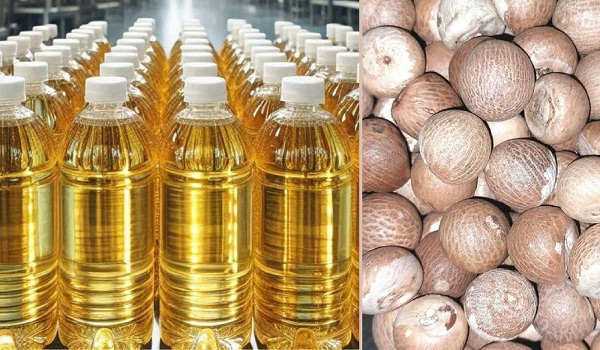
The Central Board of Indirect Taxes and Customs (CBIC) has announced revised import tariff values for several key commodities, including edible oils, with effect from July 1, 2025. The updates, notified under the Customs Act, 1962, aim to better reflect prevailing international market prices and ensure fair valuation during customs clearance.
Among the notable changes, the tariff value for crude palm oil has been set at $1006 per metric tonne, while refined, bleached, and deodorized (RBD) palm oil is now valued at $1032 per metric tonne. Other palm oil variants have been pegged at $1019. Crude palmolein will attract a tariff value of $1044, with RBD palmolein at $1047 and other types at $1046. Crude soybean oil, a major import item, is now valued at $1095 per metric tonne.
These upward revisions are expected to influence import costs and retail pricing across the edible oil value chain, including refineries, food processors, and the FMCG sector. With India being one of the world’s largest importers of edible oils, and the kharif cropping season underway, the adjustments come at a critical juncture for agri-trade and food inflation management.
In contrast, the tariff value for areca nut remains unchanged at $6970 per metric tonne. The decision provides stability for the domestic areca nut industry, which holds significant cultural and economic value in states such as Karnataka, Kerala, and Assam. Maintaining a steady import valuation is expected to protect smallholder farmers from external price pressures and preserve market balance.
Tariff value notifications, issued biweekly by CBIC, are closely monitored by commodity traders and importers for price forecasting and supply chain planning. While the current adjustments are aligned with recent global price movements, the overall impact will depend on factors such as exchange rates, freight charges, and international supply conditions.
As the government continues to fine-tune its agri-trade strategy, calibrated tariff value management remains a crucial tool in balancing consumer affordability with farmer protection.