

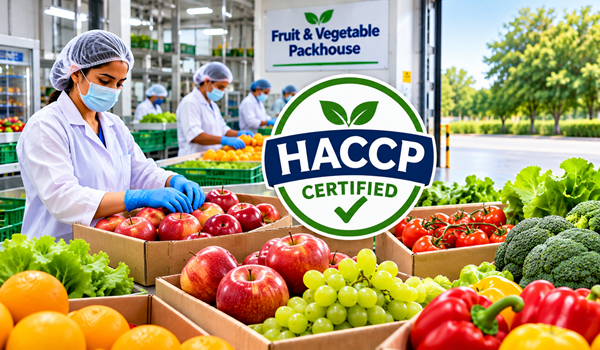
Indian packhouses that want to ship fresh fruits and vegetables to the European Union must now prove they meet global food safety standards before they can get official recognition.
The Agricultural and Processed Food Products Export Development Authority (APEDA) has issued an order that makes Hazard Analysis and Critical Control Points (HACCP) compliance a prerequisite for packhouse recognition. Without it, no Certificate of Recognition will be issued.
The change follows an onsite assessment by the European Commission, which checked the control measures India has in place for produce exported to the EU. After that review, HACCP compliance became mandatory for fresh fruit and vegetable exports under Annex II of EU Regulation (EC) No. 852/2004. APEDA has now built that requirement directly into its recognition process.
Under the new order, every packhouse applying for recognition must submit two additional sets of documents. The first is the facility’s HACCP or Food Safety Management System (FSMS) manual. The second is a HACCP or ISO 22000 inspection report and certificate, or another advanced food safety compliance certificate. These are in addition to the documents already listed in the Standard Operating Procedure (SOP) of the Packhouse Recognition Scheme.
Paperwork alone will not be enough. APEDA’s Inspection Committee will check HACCP compliance on site when it inspects each facility. It will also review the submitted documents and confirm that the packhouse meets all the other conditions of the recognition procedure.
APEDA recognises packhouses to help horticulture exporters meet international standards for quality and safety, including plant quarantine requirements. Recognised facilities serve as the starting point for produce bound for demanding markets such as Europe.
The authority has advised all packhouse operators to make sure they comply with HACCP requirements and to submit the required documents along with everything else the scheme specifies. It says this will help speed up recognition for EU exports.
For exporters, the message is clear. Access to the European market now depends on documented and verified food safety systems at the packhouse, and facilities that are not yet HACCP-ready will need to act quickly to avoid losing EU business.