

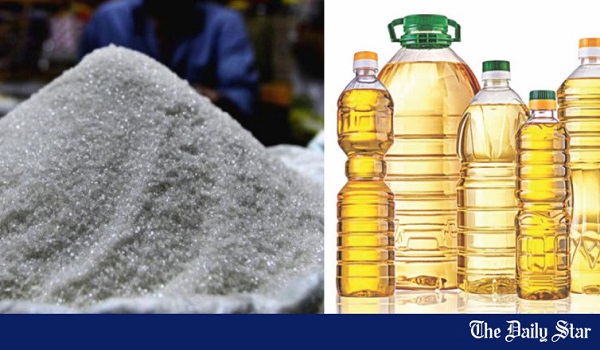
India will not impose any restrictions on sugar exports, Union Food Secretary Sanjeev Chopra said offering clarity to global markets amid concerns over supply tightening.
India, the world’s second-largest sugar producer, has been a key exporter in recent years, and the government’s stance signals confidence in domestic availability despite fluctuating production cycles and rising ethanol diversion.
Chopra’s statement comes at a time when global sugar markets remain sensitive to policy changes from major producers like India and Brazil. Industry observers note that India’s decision to maintain export continuity could help stabilize international prices while ensuring steady revenue for domestic mills.
The government has been balancing sugar availability with its ethanol blending programme, which diverts a portion of sugarcane output toward fuel production. Despite this, officials indicate that current supplies are adequate to meet both domestic consumption and export commitments.
In a parallel development, India is witnessing a temporary dip in consumption of sugar and edible oils, driven by an unexpected shortage of commercial LPG cylinders. The crunch has forced restaurants, street vendors, and small eateries to scale back operations during the peak summer travel and holiday season.
According to B.V. Mehta, Executive Director of the Solvent Extractors’ Association of India, reduced activity in the foodservice sector has directly impacted edible oil usage.
“Restaurants and roadside eateries are cutting back due to gas shortages, which is lowering edible oil consumption,” Mehta noted.
India, the world’s largest edible oil importer, saw imports decline nearly 9% in March to around 1.2 million tonnes compared to the previous month. The slowdown is expected to temporarily reduce shipments from key suppliers such as Indonesia and Malaysia (palm oil), and Argentina, Brazil, Russia, and Ukraine (Soyoil and sunflower oil).
The impact is particularly visible in India’s vast informal food ecosystem. Street vendors and small restaurants—key drivers of edible oil consumption—are struggling to operate at full capacity due to fuel constraints.
Popular deep-fried staples such as samosas, pakoras, and chole bhature have seen reduced production, affecting both consumption volumes and daily revenues for small businesses.
While the decline in edible oil consumption is seen as a short-term disruption linked to fuel availability, the broader outlook for both sugar and edible oil demand in India remains strong, underpinned by population growth, urbanisation, and rising incomes.
For now, the government’s decision to keep sugar exports unrestricted provides stability to the sector, even as the foodservice industry navigates operational challenges caused by the LPG supply crunch.