

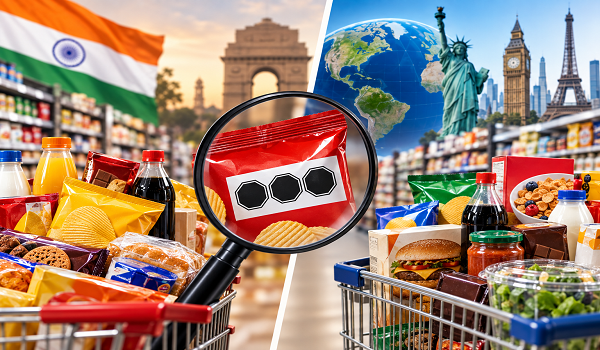
India’s push for stricter health warning labels on packaged foods is intensifying scrutiny of multinational food and beverage companies and the differences between products sold in India and other markets.
The Food Safety and Standards Authority of India (FSSAI) said it could introduce red warning labels on products exceeding prescribed limits for added sugar, salt or saturated fat. The move follows years of debate over front-of-pack nutrition warnings and comes amid growing public concern over the health impact of highly processed foods.
India is a major market for global food companies, with consumers relying heavily on affordable packaged products such as Nestlé’s Maggi noodles and Coca-Cola’s Thums Up. However, comparisons of products across countries have raised questions about whether Indian consumers receive formulations with lower-cost or different ingredients.
For instance, Maggi noodles sold in India are made with palm oil, while several versions sold in Britain use sunflower oil. Nestlé’s KitKat products in India also contain less cocoa than some versions sold in Australia.
Nestlé said its recipes are developed according to local consumer preferences, food culture, ingredient availability and climatic conditions. The company said variations in recipes do not affect product quality and that it complies with Indian food safety regulations.
The debate has gained momentum as India faces a growing burden of lifestyle-related diseases. The country accounts for roughly a quarter of global diabetes cases, with more than 101 million people living with diabetes and another 136 million estimated to have prediabetes, according to figures cited by Novo Nordisk.
At the same time, India’s packaged food market continues to expand. Research firm IMARC Group estimates the market grew from $129.18 billion in 2025 to $137.25 billion in 2026 and could reach $238.83 billion by 2034.
India has considered front-of-pack warning labels for several years, with health advocates pushing for prominent warnings on products high in sugar, salt and fat. Industry groups have opposed stricter rules, arguing that a large share of packaged foods could be affected.
The All India Food Processors’ Association estimates that around 80% of packaged food products could be classified as high in fat, sugar or salt under the proposed system.
Supporters of warning labels point to countries such as Chile, which introduced black warning symbols for products high in critical nutrients in 2016. Research has linked the policy to a significant decline in purchases of sugary drinks.
The issue has also sparked a broader debate about whether multinational companies should offer healthier formulations in India similar to those available in wealthier markets.
Industry executives argue that changing established recipes is difficult because products have been developed around local tastes and price sensitivity over decades. Higher-cost ingredients could also increase retail prices in a highly cost-conscious market.
Despite this, health advocates and consumers are increasingly questioning whether affordability should come at the expense of nutritional quality.
The debate now extends beyond individual products to a larger question: should global food brands follow the same nutritional standards across markets, or should formulations continue to reflect local tastes, costs and consumer preferences?