

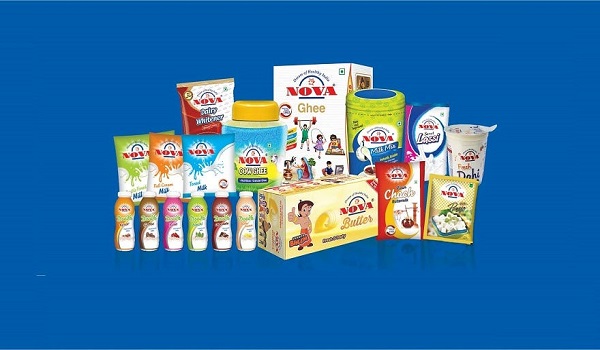
India’s dairy industry is facing a sharp demand disruption in its bulk segment, with Sterling Agro Industries Ltd. reporting no dispatches of bulk ghee or milk powder packs over the past 20 days. The company, which markets products under its flagship Nova brand, said the slowdown reflects a wider industry stress driven by geopolitical tensions and domestic supply constraints.
According to Ravin Saluja, director at the company, the halt in bulk sales—typically comprising 15-kg ghee tins and 25-kg skimmed milk powder packs—signals a significant drop in institutional demand. Bulk packs account for nearly 50% of Sterling Agro’s monthly sales, making the disruption particularly severe for its business operations.
The slowdown has been attributed to the ongoing Iran–Israel conflict, which has triggered an LPG shortage in India, impacting food service operations. Reduced activity among caterers, hotels, canteens, and sweet shops—key buyers of bulk dairy products—has directly affected demand.
Sterling Agro, which reported revenues of ₹2,190 crore in FY25, operates three manufacturing facilities with a combined milk handling capacity of 2.6 million litres per day. The company supplies bulk dairy products to large institutions and multinational clients, with exports contributing around ₹60 crore annually across more than 33 countries.
The domestic slowdown has been compounded by export challenges linked to the Middle East crisis. Key markets such as Saudi Arabia and other Gulf nations have seen shipment delays due to tighter vessel availability and rising logistics costs.
Shipping lines have imposed war-risk surcharges of up to $2,000 per consignment, while disruptions in maritime routes have led to delays and, in some cases, stranded cargo. In one instance, a consignment of 100 tonnes of anhydrous milk fat (AMF) bound for Russia was held up at a UAE port, forcing the company to reroute and sell the product in the Middle East at no profit due to additional handling, testing, and warehousing costs.
Despite a rise in dairy product prices in Middle Eastern markets, exporters have been unable to capitalize on the trend due to shipment bottlenecks and logistical uncertainties.
Adding to the strain, packaging costs have surged by nearly 30%, driven by shortages of raw materials and industrial gases used in manufacturing export-grade barrels. This has further squeezed margins for dairy processors already grappling with declining volumes.
Industry observers note that the twin impact of weakening domestic institutional demand and disrupted export channels could weigh heavily on dairy companies in the near term, particularly those heavily reliant on bulk sales.
As geopolitical tensions persist and supply-side constraints remain unresolved, the sector may continue to face volatility, with recovery dependent on stabilization in both energy supplies and global trade routes.