

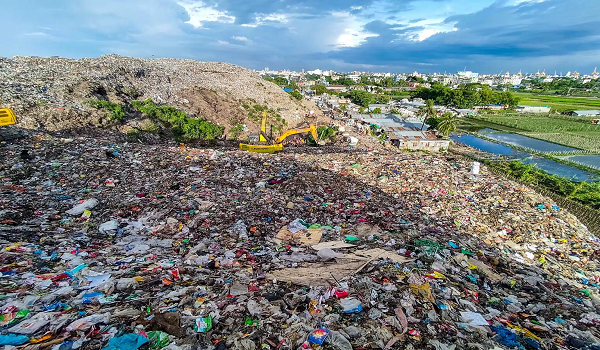
Microplastic pollution is emerging as a significant threat to India’s agricultural ecosystems, with scientists and policymakers urging coordinated and immediate action to prevent its spread across soil, water, and food systems.
A new roadmap released by the National Academy of Agricultural Sciences (NAAS) highlights the growing environmental and health risks posed by microplastics and outlines a multi-pronged strategy for mitigation. The report, titled “Microplastics Pollution: Remedial Strategies for Sustainable Environmental Management,” underscores the urgent need for a dedicated policy framework to address the issue.
Rising plastic burden in India
India generates an estimated 26 million tonnes of plastic waste annually, with nearly 9.3 million tonnes leaking into the environment. Although per capita plastic consumption remains relatively low at around 11 kg per year, the country is among the largest global contributors to plastic pollution due to its population size.
Globally, plastic production has surged sharply—rising nearly 79% between 2000 and 2015—and is projected to exceed 413 million tonnes in 2024.
Agriculture at the centre of contamination
The NAAS report identifies agricultural practices as a key pathway for microplastic contamination. The use of mulch films, greenhouse covers, and irrigation infrastructure contributes significantly to soil pollution. Over time, these materials degrade into particles smaller than 5 mm, releasing toxic additives and interacting with pesticides and persistent organic pollutants, thereby intensifying soil toxicity.
Microplastics have been detected in Indian soils at concentrations ranging between 20 and 300 particles per kilogram, with hotspots reported in regions including Goa, Bhopal, and parts of Karnataka.
Additional contributors, such as wastewater irrigation, landfill leakage, and atmospheric deposition, further accelerate contamination. These particles can also move vertically through soil layers due to tillage and climatic cycles, making remediation increasingly difficult.
Impact on crops and human health
The report warns that microplastics adversely affect plant health by reducing seed germination, impairing root development, and disrupting photosynthesis. They also interfere with nutrient uptake and hormonal balance, ultimately reducing agricultural productivity.
Microplastics are further linked to increased carbon dioxide emissions in soils by accelerating microbial decomposition processes.
Human exposure is also rising, with microplastics now detected in food, drinking water, and air. They can enter the body through ingestion, inhalation, and dermal contact, and are associated with potential impacts on the gastrointestinal, respiratory, endocrine, and immune systems.
Rivers and coasts intensify the crisis
India’s river systems play a major role in transporting plastic waste to marine environments. The Ganga River System alone is estimated to discharge around 0.12 million tonnes of plastic annually. Studies by the National Centre for Coastal Research (NCCR) identify riverine inputs and abandoned fishing gear as major contributors to coastal microplastic pollution.
Policy gaps and roadmap for action
While India has introduced regulatory measures such as amendments to the Plastic Waste Management Rules in 2021 and a ban on select single-use plastics in 2022, the NAAS report notes the absence of a dedicated national framework addressing microplastics specifically.
Key gaps include the lack of standardised detection methods, limited data on soil-to-plant transfer, weak monitoring systems, and insufficient analytical infrastructure.
NAAS President M.L. Jat has called for a science-driven, integrated response, including:
Establishing a national database and monitoring protocols
Promoting biodegradable alternatives in agriculture
Strengthening waste management and recycling systems
Upgrading wastewater treatment technologies
Expanding bioremediation and innovative cleanup solutions
The roadmap aligns with national initiatives such as the Swachh Bharat Abhiyan and the Atal Mission for Rejuvenation and Urban Transformation, but stresses the need for stronger regulation and greater public awareness.
Experts warn that without urgent intervention, microplastic pollution could severely undermine soil health, food safety, and long-term agricultural sustainability in India, posing a growing risk to both ecosystems and human health.