

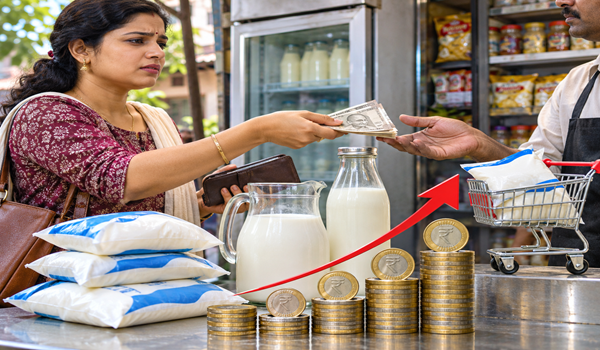
Amul, Mother Dairy and Nandini raise prices as feed costs climb and a late winter squeezes supply.
The world’s biggest milk producer is now paying more for its own milk.
Amul and Mother Dairy raised milk prices by Rs 2–4 per litre; Karnataka’s Nandini had already raised its rates on November 1. This is the second price rise this financial year for both Amul and Mother Dairy, which last raised prices in May.
Amul’s pouch milk now costs 4–5% more across its main variants. Amul Taaza toned milk (3% fat) is up Rs 2 a litre, and Amul Gold (6% fat) is up Rs 4.
In Delhi-NCR, Mother Dairy’s full-cream milk now sells at Rs 76 a litre, up from Rs 72. Its toned milk costs Rs 62, up from Rs 60.
Karnataka’s Cabinet approved a bigger rise of Rs 8 a litre for Nandini. Rs 7 of that goes to farmers and Re 1 to cooperatives.
The problem starts at the cattle shed. Patchy monsoon rains have cut fodder supplies. Mother Dairy says green and dry fodder prices have risen by up to 20% and cattle feed by about 10% over last year. Its packaging, transport and other running costs have gone up by as much as 25%.
Amul points to the same pressures. Oil cake, maize, molasses, packaging film and fuel all cost more, and rainfall in Gujarat and other states has been poor.
Payments to farmers are the highest cost. Mother Dairy spends 75–80% of what it earns from milk sales on buying milk from farmers. Amul says a large part of the extra revenue will go back to farmers.
In winter, cows usually give more milk and prices settle. Dairies call this the flush season. This year it has been delayed by El Niño-linked weather shifts. Supplies are tighter just as festival demand for paneer and ghee peaks.
India produced 247.87 million tonnes of milk in 2024-25, up from 239.30 million tonnes the year before. That is growth of 3.58%, down from 3.78% in FY24, according to the government’s Basic Animal Husbandry Statistics 2025. Each Indian now has 485 grams of milk a day available, up from 319 grams in 2014-15. There is no shortage. But supply is growing more slowly, and keeping it growing costs more.
A family that buys two litres a day will pay Rs 120 more a month after a Rs 2 rise, or Rs 240 more after a Rs 4 rise. The cost also flows into curd, paneer, tea and sweets.
Other dairy products are already pricier. Nandini paneer has jumped to Rs 485 a kg from Rs 408, and its unsalted butter to Rs 780 from Rs 700. Amul’s 500-gram butter pack now costs Rs 325, up from Rs 310. Shops in parts of Gujarat say Amul cow ghee is running short.
Still, milk is not the main driver of inflation. Government (MoSPI) data shows milk prices rose 4.21% in September. Overall retail inflation was 5.54%, and food inflation was 7.74%.
Every litre has to work for three groups. Farmers need fair pay, dairies are facing higher costs, and families want milk they can afford. For now, the extra cost is landing on the breakfast table. Producing more milk alone may not be enough to keep prices in check.