

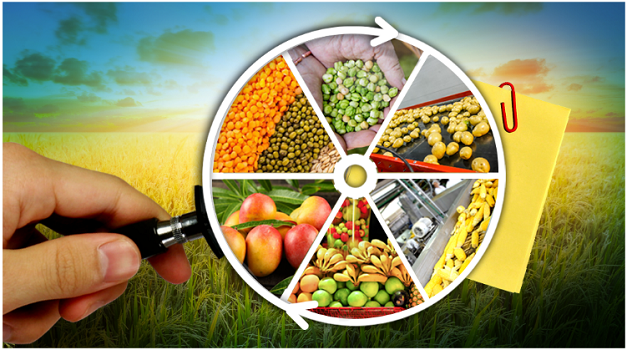
The Modi government is pushing aggressively to transform India into a global hub for food processing, banking on the country’s vast agricultural base, growing consumer demand, and supportive policy framework.
India is already the world’s largest producer of fruits, vegetables, millets, tea, food grains, milk, and livestock, making the food processing sector one of the country’s biggest industries in terms of production, consumption, and exports. Over the years, the sector has expanded across categories including fruits and vegetables, spices, meat and poultry, milk products, alcoholic beverages, fisheries, plantations, and grain processing, while also making strong inroads into packaged foods such as confectionery, chocolates, protein-rich foods, and soya-based products.
Since economic liberalization in 1991, the government has encouraged investment through joint ventures, foreign collaborations, and export-oriented units. Between 2014 and 2024, the sector attracted foreign direct investment worth $6.793 billion. Today, it contributes significantly to the national economy, accounting for 13% of India’s total exports and 6% of industrial investment, while employing over seven million people across the registered and unregistered segments.
Policy initiatives have placed food processing firmly within the Make in India mission. The government has positioned it as a priority industry to drive investment, foster innovation, and strengthen manufacturing infrastructure. According to estimates by the PHD Chamber of Commerce and Industry, the sector’s market size is expected to more than double from ₹2.64 trillion ($307 billion) in 2023 to ₹6.02 trillion ($700 billion) by 2030. Long-term projections in the Viksit Bharat@2047 report suggest the industry could reach $1.1 trillion by FY35 and cross $2.1 trillion by FY47.
Exports have also shown remarkable progress. The share of processed food in overall agricultural exports has jumped from 13.7% in 2014–15 to 23.4% in 2023–24. India’s geographical advantage—offering access to Europe, the Middle East, and Asia-Pacific—has further bolstered its role in the global food trade.
To sustain this momentum, the Ministry of Food Processing Industries (MoFPI) has launched several initiatives. Mega Food Parks are being developed in agriculturally rich regions, offering plug-and-play facilities to startups and corporations. The ministry has also rolled out investor-friendly policies, including an online portal with information on resources and incentives, collaborations with Invest India for smoother regulatory clearances, and recognition of food parks under the Harmonized List of Infrastructure Sub-sectors to improve access to financing.
Flagship schemes such as the Pradhan Mantri Kisan SAMPADA Yojana, the PM Formalization of Micro Food Processing Enterprises Scheme, and the Production Linked Incentive Scheme for Food Processing are offering financial and technical support to enterprises. Tax incentives, including profit exemptions and the allowance of 100% FDI, have further enhanced the sector’s attractiveness for domestic and global investors.
Government-backed infrastructure projects worth $2.36 billion are also underway, covering industrial parks, effluent treatment plants, testing labs, warehouses, and logistics facilities. These efforts are designed to strengthen supply chains, link farmers with processors and retailers, and ensure better storage and grading systems that enhance the value of agricultural produce.
With India’s natural resource endowment, diverse agro-climatic conditions, and rapidly expanding consumer market, the food processing sector is well placed to sustain its growth trajectory. Supported by progressive policies, rising investments, and a focus on technology and formalization, the Modi government is confident that India will emerge not just as a leading producer but as a global powerhouse in food processing.