

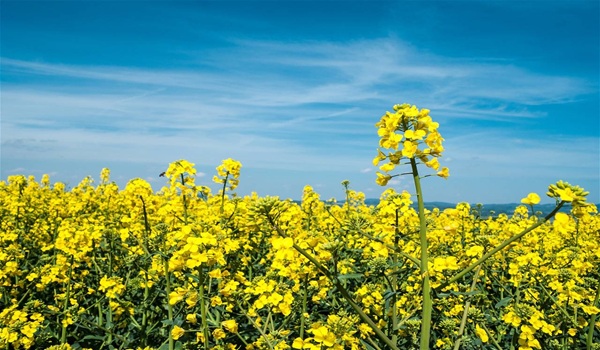
The Solvent Extractors’ Association of India (SEA), AWL Agri Business Ltd, Solidaridad Network Asia Ltd and Bharatkhand Foundation have joined hands to launch Sarson Sankalp, a five-year initiative aimed at promoting regenerative mustard farming across Bundi, Tonk and Jhalawar districts of Rajasthan.
Supported through AWL Agri Business’s Corporate Social Responsibility (CSR) programme, the initiative has a total budget of ₹16 crore and aims to reach 40,000 farmers by FY 2030–31. It will initially engage approximately 15,000 active farmers during FY 2026–27, gradually expanding its coverage over the following years.
The Memorandum of Understanding (MoU) was signed during SEA’s Annual General Meeting and Annual Awards Function held at The Westin Mumbai, Powai Lake.
Sarson Sankalp focuses on improving soil health, strengthening climate resilience, promoting efficient use of water and agricultural inputs, and encouraging environmentally sustainable mustard cultivation. The programme seeks to improve farm productivity and long-term agricultural sustainability while supporting farmers in adapting to changing climatic conditions.
A major component of the initiative will be the establishment of model and demonstration farms where growers can observe regenerative agricultural practices, compare results and gain practical knowledge. The programme will also provide farmer training, soil and crop advisory services, field-level technical support and regular monitoring of agricultural performance.
Unlike initiatives that focus on individual farming techniques, Sarson Sankalp adopts an integrated approach combining farmer education, demonstration farms, crop management guidance and measurable performance indicators. The programme will also encourage biodiversity conservation and better management of natural resources.
Under the partnership, AWL Agri Business will provide CSR funding, while SEA will oversee programme coordination and qualitative monitoring. Solidaridad Network Asia will contribute technical expertise in regenerative agriculture, quality assurance and knowledge support, while Bharatkhand Foundation will handle field implementation.
Angshu Mallick, Executive Deputy Chairman, AWL Agri Business, said the initiative represents a long-term investment in farmers, healthier soils and resilient agricultural communities, with emphasis on demonstrating practical solutions and measuring farm-level improvements.
Sanjeev Asthana, President, SEA 2024–26, said the programme demonstrates how the edible-oil industry can support farming communities through structured initiatives with measurable outcomes. He added that such partnerships could contribute towards strengthening India’s self-reliance in oilseed production.
Dr B. V. Mehta, Executive Director, SEA, highlighted the importance of effective field implementation and evidence-based results for wider adoption of regenerative practices across the mustard sector.
Dr Shatadru Chattopadhayay, Managing Director, Solidaridad Network Asia, emphasised that continuous farmer support, locally relevant knowledge and practical guidance would be essential to achieving lasting improvements in soil health, resource efficiency and agricultural resilience.
Through Sarson Sankalp, the participating organisations aim to create a scalable model for sustainable mustard cultivation that strengthens farmer livelihoods, supports environmental conservation and contributes to the long-term development of India’s edible-oil and oilseed sectors.