

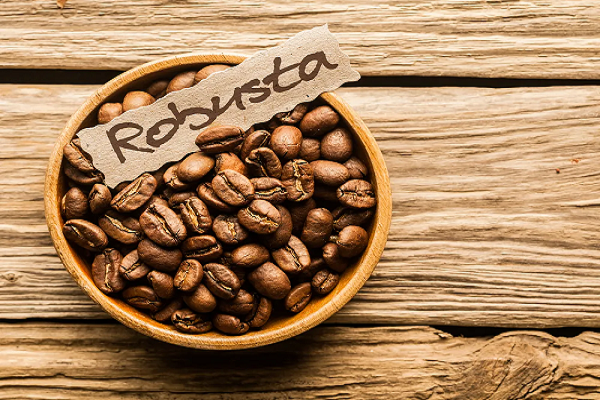
India’s coffee industry has brewed a remarkable turnaround, with exports touching an all-time high of $1.2 billion in FY2024-25, marking a 51% year-on-year jump. This surge, however, wasn’t driven by volume but by price — a windfall from the rising global demand for robusta, India’s once-overlooked bean.
At the heart of this caffeinated comeback is Kodagu (Coorg) in Karnataka, where coffee planters who shifted from the delicate arabica to the hardier robusta decades ago are now reaping rich rewards. The global supply constraints in Brazil and Vietnam — the top two coffee exporters — further helped India step into the spotlight, despite accounting for just 4% of global exports.
“In the 1990s, switching from arabica to robusta felt like settling for less,” says Bose Mandanna, a veteran grower from Kodagu. “But robusta turned out to be our savior.” Thanks to its pest resistance, lower labour demands, and steadily improving quality, robusta now dominates Indian coffee cultivation — a reversal from 70:30 arabica dominance to 70:30 in favour of robusta, as noted by MJ Dinesh, Chairman of the Coffee Board of India.
For a brief period last October, robusta parchment even fetched prices higher than arabica, with robusta selling for Rs 23,000 per 50 kg and arabica at Rs 28,000 — a gap that has narrowed dramatically from a time when robusta earned less than half.
Global appetite for robusta — particularly from Italy, Germany, Belgium, Libya, and the UAE — has transformed India’s coffee fortunes. Italy alone imported $306 million worth of Indian coffee in FY25, up 56% from the previous year. According to data from the Global Trade Research Initiative (GTRI), Belgium and Libya more than doubled their imports, while the UAE saw over 30% growth.
The key driver: robusta’s higher caffeine content, which appeals to instant coffee manufacturers and a new wave of European consumers developing a palate for its bold flavour.
Kodagu’s early and aggressive switch to robusta allowed it to ride the price wave better than regions like Chikmagalur or Hassan. Today, Kodagu produces 35-40% of India’s coffee, and its beans are snapped up by major buyers like Nestlé, Hindustan Unilever, Tata Coffee, Continental, and Lavazza. Most of the coffee is processed in Kushalnagar, a rain-shadow zone ideal for curing before being shipped from Mangaluru to international ports.
Emerging farmer collectives like Biota Coorg Farmer Producer Company, with 120 grower members, are bypassing traditional middlemen to sell directly to exporters. “This model has helped us capture more value,” says Vishwanath KK, CEO of Biota.
However, the recent dip in global prices is making growers uneasy. Robusta now trades at Rs 18,300 per 50 kg, down from Rs 24,500, while arabica has dropped to Rs 25,500, down from Rs 29,500.
Labour shortages are emerging as a serious bottleneck. “With rising welfare schemes, fewer workers are willing to take up plantation jobs,” says Nanda Belliappa, Chairman of the Coorg Planters’ Association. Labour costs in India account for 60% of production expenses, far higher than Brazil’s 25% and even less in Vietnam, where family-run farms dominate.
Adding to this are man-elephant conflicts, especially in Kodagu where plantations lie in elephant corridors. “The ripening jackfruits used as shade trees often attract herds,” says Abhishek V, Deputy Conservator of Forests, Madikeri. Karnataka’s elephant population, at 6,395, is the highest in India, making human-animal encounters frequent and sometimes fatal.
Despite these challenges, India’s traditional shade-grown coffee practices may offer a competitive advantage under the upcoming European Union Deforestation Regulation (EUDR), which takes effect in December 2025. India is considered a low-risk country under the EUDR, as no recent deforestation has occurred for coffee cultivation.
Sustainability-focused players like Ekata Inc., a Kerala-based exporter, are leveraging this to position Indian coffee as a climate-positive product. “We brand ourselves as a climate-cooling coffee company,” says Shameel CP, co-founder of Ekata, which follows organic practices and exports directly to European consumers.
Even small estates are getting support to adapt. Ekata, for instance, partners with growers across India and globally — including in Peru, Kenya, and Ethiopia — to promote ethical farming and traceability.
While countries like Brazil rely on machines and artificial dryers, India’s coffee is still hand-picked and sun-dried, retaining its artisanal flavour. But as the demand grows, so does the concern: Who will pick the beans in the future?
“Labour is becoming scarcer. If this trend continues, we’ll struggle to maintain our traditional methods,” warns Mandanna.
India’s coffee sector, once seen as a peripheral player, is now claiming its place on the global map — not just due to market dynamics, but thanks to strategic adaptation, farmer-led collectives, and a renewed focus on sustainability.
The recent boom may face volatility in prices and workforce availability, but India’s shade-grown, traceable, and ethically cultivated beans have earned a premium reputation. As the world rethinks its coffee cup in terms of origin, climate impact, and flavour authenticity, India is well-positioned to remain part of the conversation — one robusta bean at a time.