

Synopsis
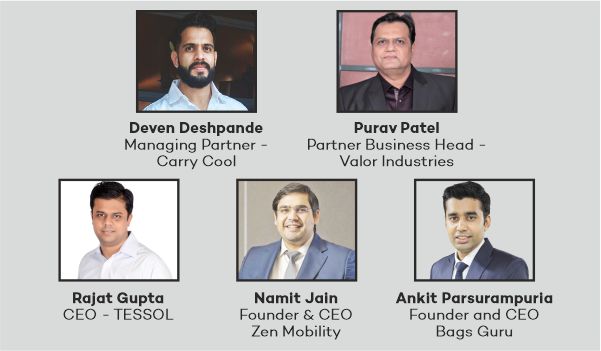
In India’s race for instant gratification, delivering frozen desserts—intact and delightful—has become the gold standard of last-mile logistics. This article explores how leading minds across packaging, mobility, and cold-chain technology are solving the unique challenge of ice cream delivery in a climate where 40°C heat is the norm. Through exclusive insights from Rajat Gupta (TESSOL), Deven Deshpande (Carry Cool), Ankit Parsurampuria (Bags Guru), Purav Patel (Valor Industries), and Namit Jain (Zen Mobility), we unpack the technologies, innovations, and roadblocks shaping the frozen frontier.
Introduction:Ice Cream at Warp Speed
Just a few years ago, the idea of ordering ice cream online and receiving it frozen solid within 10–15 minutes would have seemed implausible. But in 2025, thanks to India’s booming quick commerce (q-commerce) platforms and rapid cold chain innovation, that’s exactly what’s happening in metros and Tier I cities. This revolution hasn’t come easy—it is the result of layered problem-solving in thermal packaging, electric mobility, data-driven compliance, and logistics redesign.
We spoke to four pioneers from different corners of this fast-evolving space to understand how they’re enabling India’s favourite dessert to stay frozen at the finish line.
The Quick Commerce Catalyst
The rise of q-commerce platforms like Zepto, Blinkit, and Swiggy Instamart has rewritten the rules of food logistics. “Quick commerce has changed the complete outlook for last-mile cold chain delivery,” says Rajat Gupta, CEO of TESSOL, which pioneered many of India’s thermal packaging innovations.
“With some brands seeing over 25–30% of their sales coming from q-commerce, this is no longer an alternate channel—it’s central,” he adds. “It’s forced the mid- and last-mile supply chain to become more agile, cost-efficient, and innovative—without compromising product integrity.”
For Deven Deshpande, Managing Partner at Carry Cool, this shift has been both a boon and a pressure point. “Yes, the platforms made the impossible possible. But ice cream is the most demanding product in food logistics. The last mile is still the bottleneck—ensuring -18°C till the doorstep is not easy.”
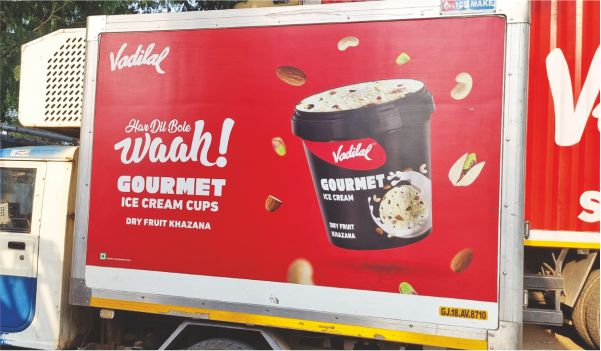
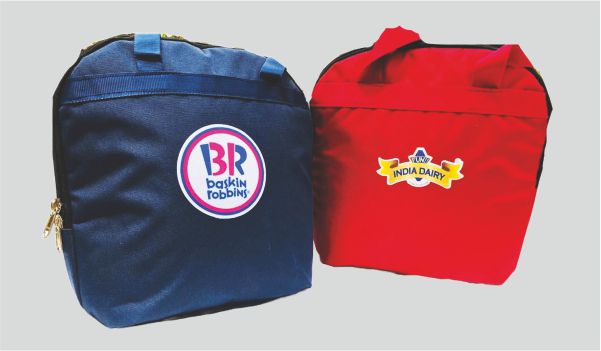
The rise of quick commerce—with 10-minute delivery promises—has reshaped India’s last-mile supply chain. Swiggy’s ₹10 billion push through Scootsy drove a 23% YoY jump in revenue, reaching ₹1,693 crore. As demand grows for cold, fresh ice cream at home, robust thermal bags have become critical. “These insulated bags are a turnkey solution,” says Ankit Parsurampuria, MD, Bags Guru. “They maintain sub-zero temperatures from warehouse to doorstep—even in peak summer heat.”
Packaging: The New Battleground
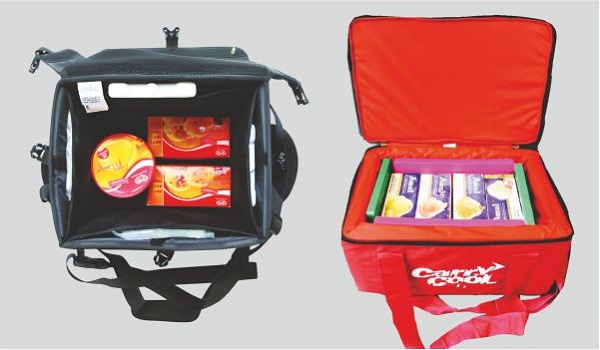
In this war against melting, packaging is both armor and arsenal. “Currently, many players are using low-cost, single-use laminated bags just 1–2 mm thick,” Deshpande explains. “These are often given away free, and there’s no reverse logistics to collect them back. But they can’t maintain -18°C even for 10 minutes in peak summer.”
Deshpande has been in this field for over 25 years, offering premium insulated bags (10–30 mm thickness) with ice pads specifically for frozen food delivery. “We’ve been exporting and supplying these for decades. They work—but industry adoption is slow because everyone’s trying to cut costs.”
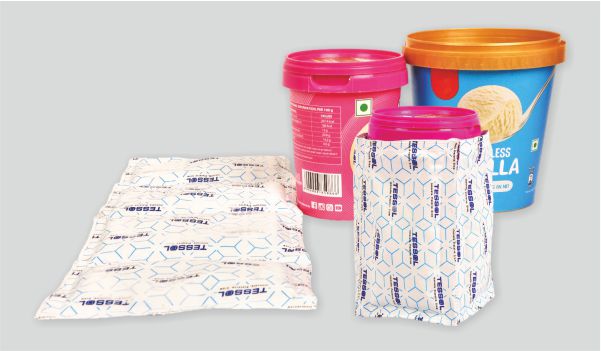
One notable innovation came from TESSOL, which introduced indiWRAP™ in 2020—a PCM-based wrap designed to hug the ice cream and keep it cool for 30–45 minutes without bulky insulation. “It became the industry standard,” says Gupta. “It’s now widely adopted, even copied.”
Purav Patel, Partner at Valor Industries, agrees that insulation is the linchpin. “A one-size-fits-all model doesn’t work across India’s climate zones,” he says. Valor’s Gelid line includes EPS/PUF boxes and multi-layered insulated bags using aluminium foil, EPE foam, air bubble wrap, and kraft paper. “We rigorously test every product to perform under India’s worst summers—some regions go over 45°C.”
To address premium client needs, Valor also integrates wireless temperature loggers into packaging. “It offers full traceability—from dispatch to doorstep.”
Parsurampuria notes that several delivery innovations now support ice cream’s safe transit. CoolMaster™ non-woven bags by Bags Guru offer an affordable fix for last-mile melting, keeping products cold for an extra 30 minutes. PCM liners provide up to 72 hours of temperature stability, while reefer vehicles and bike-mounted coolers with real-time tracking are being used in metro cities. Swiggy and Blinkit riders also rely on dry ice and gel packs, though user feedback varies—from “dry ice works amazingly well” to complaints like “tubs crush the bars.”
The Rise of Smart, Electric Delivery Vehicles
But it’s not just about packaging—the delivery vehicle is the other half of the equation.
Namit Jain, Founder & CEO of Zen Mobility, explains the role of purpose-built electric vehicles in transforming cold chain logistics. “We developed Zen ThermoFlex, a compact electric three-wheeler with integrated cold storage that can maintain -20°C during peak summer. It’s built for India’s narrow lanes and congestion.”
With a range of 100–120 km on a single charge, ThermoFlex addresses both sustainability and performance. “You don’t need massive diesel vans to deliver a ₹200 gelato anymore. We’ve made it efficient and eco-friendly.”
Zen’s vehicle also enables dynamic route planning, reaching customers in gated communities or dense apartment complexes that larger trucks cannot access. “We’re bridging the final gap in cold-chain delivery,” Jain says.
Going Beyond the Bag: PCM, Active Cooling, and Monitoring
Where traditional systems relied on dry ice, innovators now use Phase Change Materials (PCM), which are safer, reusable, and more cost-effective. “In the mid-mile, our PCM solutions reduce cost by up to 60%, with 95%+ compliance,” says Gupta of TESSOL. “Dry ice has its risks—frostbite, hazardous fumes—while PCM is cleaner.”
Patel agrees, adding that Gelid PCMs are now available in multiple configurations based on climate and route time. “We’re even integrating these into plug-in active cooling boxes for electric bikes.”
Parsurampuria shares that Bags Guru has responded to the ice cream industry’s unique last-mile challenges with its customized CoolMaster™ non-woven bags. These bags are engineered with advanced thermal insulation to maintain ideal temperatures, even in demanding conditions. Their rainproof and dustproof design protects products during unpredictable weather, while food-safe, hygienic materials ensure compliance and consumer trust. Reusable and durable, they also offer a cost-effective, eco-friendly solution for consistent and reliable ice cream delivery across diverse geographies.
Deshpande, a vocal advocate for stricter industry standards, says, “The use of high-quality insulated bags with PCM pads is no longer optional—it’s inevitable. Manufacturers and aggregators must together set clear compliance norms to protect quality and customer trust.”
TESSOL and Valor are both working with IoT-based wireless temperature loggers that provide real-time data. “These sensors help track compliance, optimize performance, and reduce disputes,” Gupta notes. “They’re increasingly affordable and becoming a standard in high-frequency delivery.”
Challenges: Cost Pressures and Lack of Standards
While the innovation is inspiring, roadblocks remain.
Deshpande says bluntly: “Everyone’s trying to stay in the race, so they’re cutting corners. Melted ice cream is still being delivered because cheap packaging saves a few rupees.”
Gupta adds, “Reverse logistics remains unsolved. If we had a system to retrieve and reuse insulated bags, that would solve both the environmental and cost issues. But no one wants to bear the cost.”
There’s also a need for standardization. “Right now, compliance varies by brand. There are no pan-industry regulations ensuring sub-zero delivery,” Patel explains. “We need shared frameworks—especially as ice cream becomes a year-round demand, not just a summer indulgence.”
Customized Solutions for a Diverse Nation
India’s geography presents another complexity. “Delivering in Mumbai’s humidity is different from Delhi’s dry heat or Shimla’s terrain,” says Patel. Valor customizes insulation by region, and even tests performance in simulated conditions.
For example, their Gelid MiniPod is tailored for two-wheeler deliveries in tight urban zones, while large-volume Gelid Crates serve B2B routes in Tier II cities. “We’ve built modular solutions that brands can scale based on geography.”
Zen Mobility is also exploring battery swapping models for higher efficiency. “Downtime is the enemy in q-commerce,” says Jain. “If we can pop in a fresh battery and go, the delivery cycle is uninterrupted.”
What’s Next: A Frozen Future Built on Innovation
So where is the industry headed?
Gupta believes the future will be “frozen, flexible, and traceable.” Innovations in lightweight PCMs, packaging materials, and subscription-based compliance monitoring will define the next phase. “We’ll see more data dashboards than paper manifests.”
“The future is smart and connected,” says Parsurampuria. “AI-driven demand forecasting will help optimize fleet scheduling, while mobile solar-powered carts and drone deliveries—especially for remote or high-traffic event settings—will redefine last-mile efficiency.”
As India’s quick-commerce ecosystem rapidly expands, the demand for reliable, insulated delivery solutions for temperature-sensitive products like ice cream is only growing. Bags Guru’s innovative thermal bags are designed to meet this demand, combining advanced insulation with smart tech integration. “We’re not just delivering ice cream,” he adds, “we’re delivering a promise—of freshness, efficiency, and a distribution network that’s ready for the future.”
Deshpande foresees an alliance between manufacturers and platforms. “We must co-create standards, not just race for speed. A melting scoop affects trust—brands cannot afford that anymore.”
Patel envisions a hybrid cold chain where passive insulation meets active tracking and mobility. Valor’s upcoming range will feature embedded temperature sensors synced to rider apps. “Full visibility is the next big ask.”
Jain wraps it up perfectly: “Ultimately, the future of ice cream delivery is not just cold—it’s smart, sustainable, and scalable. With the right mix of tech, trust, and temperature control, we’re not far from a world where frozen indulgence reaches even the remotest corners of India—faster, safer, and better.”
Conclusion: Innovation Is the Main Ingredient
In the end, India’s ice cream revolution isn’t just about speed—it’s about reinventing an entire supply chain for a product that melts under pressure. From flexible PCM wraps to GPS-tracked insulated crates and e-vehicles with inbuilt freezers, the country is building one of the most advanced cold-chain ecosystems in the world.
As q-commerce expands to Tier II and III cities, these innovations must become more affordable, reusable, and standardized. The next time your mango sorbet arrives at your door, perfectly frozen despite the 42°C heat outside—know this: it wasn’t magic. It was packaging, planning, and purpose-led innovation.