

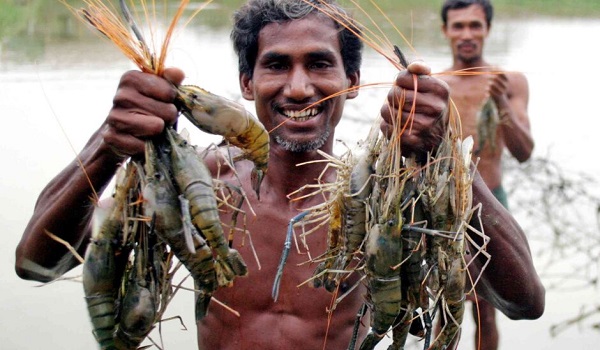
India’s shrimp industry, a cornerstone of Andhra Pradesh’s economy, is reeling from U.S. President Donald Trump’s 50% tariff threat, with a 25% levy already in effect and another 25% set to begin on August 27. The tariffs, aimed at penalizing India for its Russian oil imports, have led exporters to slash rates paid to farmers by nearly 20%, erasing profits for many of the 300,000 shrimp farmers in Andhra Pradesh, the heart of India’s shrimp exports to the U.S.
The United States, the largest market for India’s shrimp, accounted for $2.5 billion of the country’s $7.4 billion seafood exports last year, with shrimp comprising 40%. However, the tariffs have disrupted this vital market, with U.S. buyers like Walmart and Kroger unwilling to absorb the costs, forcing exporters to lower prices. “There’s hardly a 20-25% profit on good days, and if that’s getting eaten up, what else is left?” said Gopinath Duggineni, a local union chief in Ongole, Andhra Pradesh.
Farmers like V. Srinivas, a 46-year-old from Veeravasaram village with $45,800 in loans, are struggling to stay afloat. “These prices won’t help me make profits or pay off my loan,” Srinivas said, contemplating a switch to fish farming. Half of the 12 farmers interviewed by Reuters are considering abandoning shrimp farming for alternatives like fish farming or vegetable retailing, while others are waiting for clarity.
The tariffs give competitors like Ecuador, facing a lower 15% tariff, a significant advantage. Ecuador’s aquaculture industry is poised to capitalize, though cautiously, amid hopes of a potential U.S.-India tariff deal.
With each shrimp cultivation cycle taking over two months, farmers face high operating costs and loan repayments despite falling prices. Many are seeking financial aid from the Andhra Pradesh government, while the state explores boosting domestic consumption and exports to markets like China and the EU. However, Pawan Kumar of the Seafood Exporters Association of India warns that diversifying markets “won’t happen overnight.”
The situation underscores the global impact of Trump’s tariffs, straining U.S.-India relations and threatening the livelihoods of millions in India’s seafood industry.