

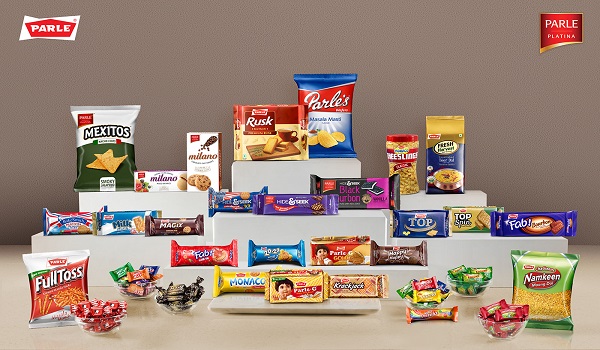
Parle has retained its crown as India’s most chosen in-home FMCG brand for the 13th consecutive year, while Britannia continues to dominate the out-of-home category for the third year in a row, according to the Brand Footprint India 2025 report by Worldpanel (Numerator).
The annual ranking, which measures Consumer Reach Points (CRPs) based on household penetration and frequency of purchase, highlights evolving consumer preferences across India’s FMCG landscape.
In-Home Rankings
Parle led with 8,605 million CRPs, followed by Britannia (8,241 million) and Amul (6,517 million).
Clinic Plus secured fourth place (3,977 million).
Surf Excel entered the top five for the first time, reaching 3,438 million CRPs after climbing steadily from eighth place in 2023.
Haldiram’s made a striking debut in the top 10, rising from 19th place in 2023 to 10th in 2025.
Out-of-Home Rankings
In out-of-home consumption, Britannia retained the top spot, with Haldiram’s and Cadbury ranking second and third, respectively. Balaji surged to second place overall in out-of-home snacks, driven by rural penetration and affordable pack sizes.
Growth Stories
The report underlined the rise of regional and mid-sized brands:
Balaji expanded rural reach with small packs, adding 10 million new shoppers and growing 22%.
Everest gained seven million households (+10%) by strengthening spice distribution.
Goodknight grew 14% with incense-based repellents.
Wagh Bakri spread beyond western India, adding five million new buyers (+19%).
Godrej Expert Crème saw the sharpest expansion, adding 15 million shoppers (+37%) through affordable packs and rural van distribution.
Overall Market
Indian consumers made 120 billion brand choices in 2024, reflecting growth but at a slower pace compared to previous years, particularly in food and beverages.
The findings reinforce two clear trends: legacy brands like Parle and Britannia continue to dominate, while regional players are scaling faster, reshaping India’s FMCG map.
Ingredient News
Nestlé Unveils Breakthrough Cocoa Process to Tackle Climate Threats and Boost Yields
Nestlé has announced a pioneering process that could reshape global cocoa production at a time when climate change and soaring costs are straining the supply of the world’s favorite sweet treat.
The Swiss food giant said its R&D team has developed a method that uses up to 30% more of the cocoa fruit—including the pulp, placenta, and pod husk, in addition to the beans—to produce chocolate without compromising taste. The innovation not only reduces waste but also offers farmers a chance to earn more from each harvest.
The discovery comes as cocoa prices, which hit a record high of more than $12,000 a ton in late 2024, have since fallen below $8,000. While prices have eased thanks to better weather and rising production, volatility remains high, with experts warning of persistent climate-driven challenges in major growing regions such as Ivory Coast and Ghana.
“Climate change is increasingly affecting cocoa yields around the world. We are exploring innovative solutions that could help farmers maximize the potential of their harvests,” said Louise Barrett, head of Nestlé’s Confectionery R&D center in York, U.K.
Nestlé’s approach collects the entire cocoa pod as a wet mass, which then ferments naturally to unlock chocolate flavor before being dried, roasted, and ground into flakes. The company believes the technique could provide a more sustainable pathway for the industry, where traditionally only the beans are used and much of the fruit is discarded.
The move follows industry-wide efforts to secure cocoa’s future. Earlier this month, Mars revealed it was turning to CRISPR gene-editing technology to develop more resilient cocoa plants, while Mondelēz International has invested in lab-grown cocoa through startup Celleste Bio.
Despite falling prices, chocolate demand remains robust. U.S. confectionery sales hit a record $21.4 billion last year, with 65% of consumers indulging, according to the National Confectioners Association. Yet, higher costs are pushing confectionery makers to raise prices. Hershey has signaled double-digit increases, while Lindt & Sprüngli hiked prices 15.8% in the first half of the year. Mondelēz, which owns Toblerone and Milka, has also warned of further hikes in 2025.
With its latest breakthrough, Nestlé hopes to cushion the blow of cocoa volatility while giving consumers their beloved chocolate in a more sustainable and climate-resilient way.