

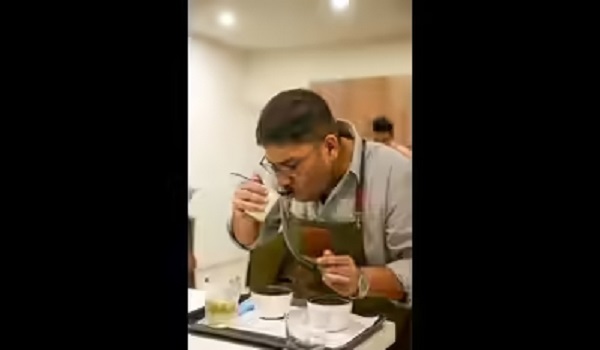
In a state where tea reigns supreme and coffee is often an afterthought, a quiet revolution is brewing in Vadodara. Ankur Gupta, 41, has etched his name into history as Gujarat’s first certified Q Grader — an elite title held by just about 5,000 people worldwide.
If wine has its sommeliers, coffee has its Q Graders. They are the custodians of taste, trained to detect the most delicate nuances in a cup — from a hint of citrus to the whisper of caramelized sugar. They are the bridge between farmers, roasters, and consumers, ensuring that when coffee is labelled specialty, it truly deserves the distinction.
“We’re trained to assess coffee with the same protocols used globally. This helps farmers get fair prices, roasters find the right beans, and consumers trust what’s in their cup,” explains Gupta, a Bachelor of Hotel and Tourism Management graduate from Saurashtra University.
The Road to Certification
Becoming a Q Grader is no casual tasting exercise. The title is awarded by the Coffee Quality Institute (CQI), USA, after a punishing six-day exam marathon. Candidates must survive 19 tests that challenge both intellect and sensory precision.
The journey begins in the classroom, where written exams cover coffee botany, origins, and processing methods — from washed to natural to honey-processed beans. Candidates then dive into the science of roasting and brewing, learning to grade green beans for defects and evaluate roast profiles for underdevelopment or perfection.
But the real trial is sensory. Gupta endured endless triangulation tests — where three cups are placed side by side and one must pick out the odd one, sometimes for barely perceptible differences. He spent hours at cupping tables, sampling coffees from Ethiopia to Colombia, scoring them on the strict Specialty Coffee Association (SCA) scale.
The exams test not just skill but sensory stamina. Using the Le Nez du Café kit, Gupta had to identify dozens of aromas, from berry-like fruit notes to earthy undertones. In gustatory tests, he distinguished between varying levels of sweetness, sourness, saltiness, and bitterness. The acid test was literal — identifying citric, malic, and acetic acids dissolved in solution. And in one particularly mind-bending module, candidates had to pair cups of identical taste intensity, a challenge that demands both focus and a finely tuned palate.
“It’s rare to clear all 19 modules in one go,” Gupta admits. “The process is intense but deeply rewarding. You begin to realize that coffee is a language — and you’re learning to read every syllable.”
Busting Myths, Brewing Futures
For Gupta, the certification is not just a matter of personal glory. It’s also about challenging India’s deep-rooted coffee misconceptions.
“There’s a myth across India that black coffee is bitter, and the more bitter it is, the stronger it is. That’s simply not true. A good coffee should never taste burnt or unpleasantly bitter. True strength comes from complexity — balance of acidity, sweetness, and body,” he explains.
Now counted among just 55 Q Graders in India, Gupta has put Gujarat firmly on the specialty coffee map. Originally from Ambala, with years of experience in hospitality, he sees his achievement as part of a larger cultural shift.
“Becoming a Q Grader is like earning the highest pedigree in the coffee industry,” he says with quiet pride. “As coffee culture picks up in Gujarat, I feel proud to contribute to that movement. We are a tea-loving state, but the aroma of change is already in the air.”