

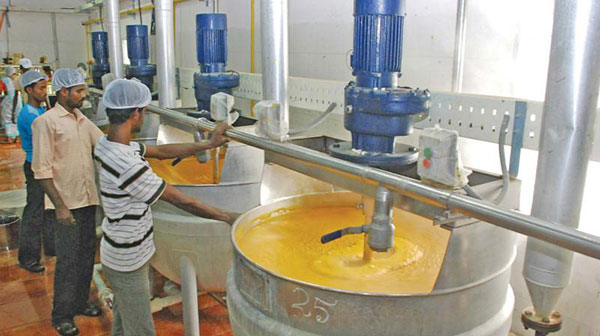
Mango pulp processors in Andhra Pradesh have urged the central government to step in as escalating tensions in West Asia disrupt key export routes, leaving large volumes of processed mango stock stranded across warehouses and ports.
The All-India Food Processors Association has approached the ministries of finance and commerce through Rajampet MP P V Midhun Reddy, highlighting the severity of the crisis. Separately, processors from the state’s key production belt have also written directly to the finance ministry seeking immediate relief.
According to industry estimates, nearly 2.5 lakh tonnes of mango pulp—valued at around ₹1,000 crore—remains stuck due to disruptions in shipping lanes to the Middle East and Europe, two critical export markets.
The situation is particularly acute in Chittoor, India’s largest mango pulp hub, which along with Krishnagiri accounts for a significant share of the country’s processed mango exports.
With a shelf life of about 12 months for the 2025 season’s stock, processors have warned of potential spoilage if shipments are not resumed soon.
To manage the mounting inventory and cash flow stress, processors have sought inclusion under the proposed ₹10,000 crore SME Growth Fund, requesting equity capital support to ease immediate financial pressure.
They have also called for a credit guarantee mechanism similar to the Emergency Credit Line Guarantee Scheme (ECLGS), which would allow access to an additional 20% working capital.
Further, the industry has requested a 3–6 month moratorium on loan repayments and interest for MSME exporters affected by the ongoing trade disruptions.
Processors are also seeking inclusion of mango pulp under the RELIEF (Resilience & Logistics Intervention for Export Facilitation) scheme. This would enable reimbursement of rising freight costs and insurance surcharges triggered by the geopolitical situation.
Industry stakeholders say swift intervention is critical to prevent large-scale financial losses and protect India’s position in the global processed fruit market.
The current crisis underscores the vulnerability of export-dependent agri-processing sectors to geopolitical shocks, even as India continues to expand its footprint in global food trade.