

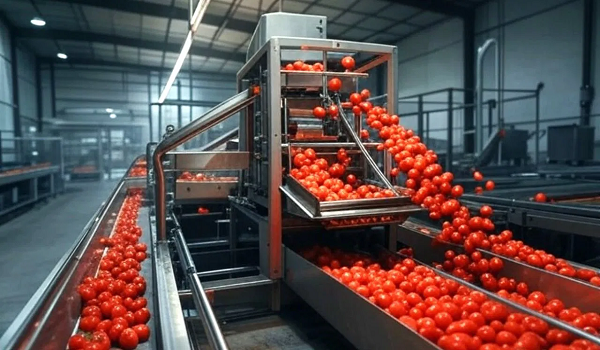
The government is preparing a fresh round of the Production Linked Incentive (PLI) Scheme for the Food Processing Industry (PLIS-FPI), with Food Processing Secretary A. P. Das Joshi confirming the development at FICCI’s 98th Annual General Meeting. This upcoming phase is expected to go beyond boosting manufacturing capacity; it aims to deepen value addition, improve shelf life, and make Indian processed foods more export-ready.
The first edition of PLIS-FPI, launched in 2021, has already drawn ₹8,910 crore in investments across 213 locations and generated nearly 2.89 lakh jobs as of October 2024. A key feature of the earlier scheme was its emphasis on using domestically grown agricultural produce—excluding additives, flavourings, and oils—which significantly strengthened farmer procurement and rural incomes. The policy push comes at a time when India’s demand for processed foods is rapidly expanding, fueled by urbanisation, shifting lifestyles, and the growing popularity of ready-to-eat and ready-to-cook formats, alongside rising export ambitions.
Industry studies underline this momentum. A joint report by Deloitte India and FICCI indicates that the food-processing sector is undergoing a structural shift driven by health-conscious consumers, rural market expansion, and a stronger focus on clean-label products. What began as simple value addition is now evolving into broader value creation. Other market assessments suggest that India’s processed food segment could potentially double in size over the next few years, making the timing of a new PLI round particularly significant.
As the government shapes the next phase, key areas to watch include the likely expansion of eligible product categories—such as millets, organic foods, and regional specialities—and whether incentives will better support small and medium manufacturers. Strengthening supply-chain infrastructure, particularly in cold-chain, storage, packaging, and logistics, will also be critical to enabling higher value addition. Another aspect under consideration is the scheme’s export focus, especially in meeting global food-safety and quality benchmarks. Finally, the impact on farmers will remain central; if procurement-linked conditions stay strong, the scheme could further bolster rural incomes, reduce post-harvest losses, and contribute to more resilient agricultural value chains.