

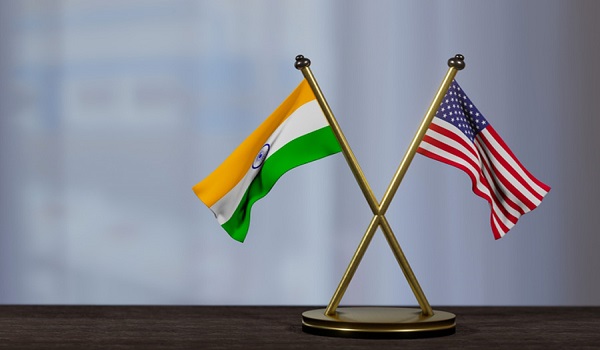
US President Trump’s announcement of a trade agreement with India has brought agriculture into sharp focus, even as critical details of the deal remain unclear. While Washington has projected the agreement as a major boost for American farm exports, New Delhi has adopted a more cautious tone, underscoring broader economic and technological gains rather than agricultural concessions.
In a post on Truth Social, Trump said the deal would reduce US tariffs on Indian goods to 18% from 50%, in exchange for India halting purchases of Russian oil, lowering trade barriers and committing to “buy American at a much higher level.” He added that India would import over $500 billion worth of US energy, including coal, along with technology and agricultural products.
However, the announcement stopped short of specifying which agricultural commodities India would import, in what quantities, or over what timeframe. There was also no clarity on when the tariff reductions would take effect, how trade barriers would be lowered, or whether any formal deadlines had been agreed upon. As of now, the White House has not issued a presidential proclamation or published a Federal Register notice—both prerequisites for tariff changes to become legally effective.
The lack of detail is significant because agriculture, particularly dairy, has been the most sensitive aspect of India–US trade negotiations for nearly a year. Trump’s repeated emphasis on farm exports, echoed by senior US officials, has intensified scrutiny over whether India may have made concessions in politically delicate sectors.
A day after Trump’s announcement, US Secretary of Agriculture Brooke Rollins reinforced the administration’s narrative, stating on X that the deal would expand American farm exports to India’s “massive market,” support rural incomes in the US and help reduce America’s $1.3 billion agricultural trade deficit with India recorded in 2024. She described the agreement as an “America First victory” for US farmers.
India’s messaging, however, has been notably restrained. Commerce and Industry Minister Piyush Goyal framed the agreement as a platform to unlock opportunities for farmers, MSMEs, entrepreneurs and skilled workers, while highlighting access to US technology. His remarks focused on the themes of “Make in India, Design in India and Innovate in India,” without signalling large-scale agricultural imports from the US.
According to a Reuters report citing an unnamed Indian official, agriculture will form part of the agreement but only in a limited manner. The official indicated that India had offered market access for select agricultural products, adding that the deal announced by Trump represents only the first tranche, with a more comprehensive agreement to be negotiated in the coming months.
This divergence—expansive claims from Washington, cautious language from New Delhi and limited disclosures from both sides—has placed agriculture at the centre of the debate.
Reports over the past year suggest that India has consistently resisted opening up its farm and dairy sectors to imports that could disrupt domestic producers. Corn, soybeans, ethanol and dairy products have been the most contentious issues. The US has sought access for corn and soybeans, which are largely genetically modified, as well as ethanol linked to corn production. India, however, has long opposed genetically modified food and feed crops and has maintained a firm stance against dairy products derived from meat-fed cattle.
During negotiations, one option discussed was allowing imports of corn or soy-based products strictly for non-food uses, such as ethanol blending or animal feed. Products like soymeal and distillers dried grains with solubles were considered less sensitive than food-grade imports. There were also exploratory discussions around sourcing non-GM corn or soybeans from the US, though such supplies are limited and more costly.
At the same time, India reportedly drew clear red lines around dairy, rice and wheat, citing food security concerns and the livelihoods of millions of small farmers. Dairy, in particular, has remained non-negotiable.
Against this backdrop, analysts believe the current announcement may follow a familiar pattern—strong political signalling from the US, especially to its farming constituency, while India’s actual concessions, if any, remain narrow and carefully calibrated. Until official product lists, quantities and conditions are disclosed, agriculture and dairy are likely to remain the most closely watched—and unresolved—elements of the India–US trade deal.