

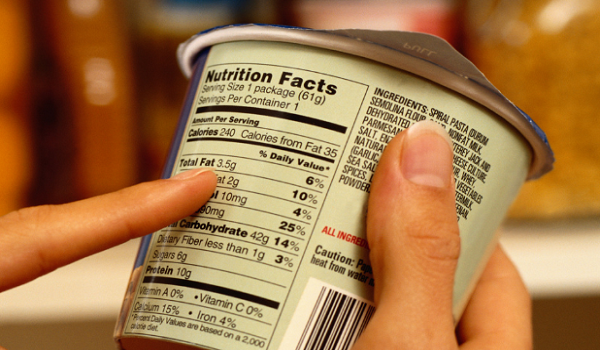
The Supreme Court has directed the Food Safety and Standards Authority of India (FSSAI) to seriously evaluate the introduction of front-of-pack warning labels on packaged foods, highlighting concerns over high levels of sugar, saturated fats, and sodium that could pose risks to public health.
A bench comprising Justices J.B. Pardiwala and K.V. Viswanathan observed that while food companies may resist stricter labelling norms, the regulator’s primary responsibility is to safeguard consumer health. The court noted that a prima facie case exists for such disclosures to serve broader public health interests and cautioned that failure to act could invite judicial intervention. FSSAI has been asked to submit its response within four weeks.
The direction came during the hearing of a public interest litigation seeking mandatory front-facing warnings on packaged foods. The petition argued that existing nutrition information displayed on the back of product packaging is insufficient to help consumers make informed dietary choices, particularly amid rising consumption of processed and packaged foods.
Front-of-pack labels are intended to clearly indicate elevated levels of sugar, salt and saturated fats, enabling consumers to better understand potential health risks. The plea further contended that the absence of prominent warnings may mislead consumers regarding the nutritional value of products and contribute to growing public health concerns such as obesity, diabetes and cardiovascular disease.
The court’s observations come at a time of heightened regulatory scrutiny of food labelling and health claims. In recent months, FSSAI has issued advisories and intensified checks across categories, including edible oils, honey, beverages, nutraceutical,s and ready-to-eat foods to address misleading or inadequately substantiated claims.
Parallel legal and regulatory discussions are also underway regarding warning labels on alcohol. A separate public interest litigation before the Bombay High Court seeks cancer-related warnings on liquor bottles, citing international precedents such as Ireland and South Korea. The World Health Organization has maintained that no level of alcohol consumption is completely safe for health.
The Supreme Court’s intervention is expected to accelerate policy deliberations around transparent nutrition disclosure, potentially reshaping labelling standards for India’s packaged food industry.