

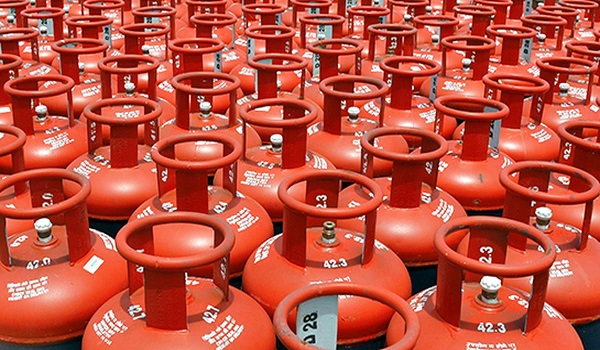
The Indian government has invoked the Essential Commodities Act, 1955, to ensure an uninterrupted supply of cooking gas across the country, following rising concerns over possible disruptions in global energy routes due to escalating tensions in the Middle East. The move comes as the ongoing conflict involving the United States, Israel, and Iran threatens to affect oil and gas shipments passing through key maritime routes.
Officials fear that instability in the region could impact the supply of liquefied petroleum gas (LPG), which is widely used by households and commercial establishments in India. To prevent shortages and ensure that domestic consumers continue to receive cooking gas without disruption, the government has directed oil refineries and petrochemical units to increase LPG production to the maximum possible level.
Under the order, refineries have been instructed to divert propane and butane streams—hydrocarbon components used in LPG production—entirely toward manufacturing LPG. This measure is aimed at boosting domestic availability of the fuel in case imports are affected.
India’s dependence on imported LPG makes the situation particularly sensitive. According to government data, the country consumed around 31.3 million tonnes of LPG during the financial year 2024–25. Of this, 12.8 million tonnes were produced domestically, while the remaining demand had to be met through imports. A significant portion of these imports—nearly 85% to 90%—comes from countries such as Saudi Arabia.
Most of these shipments pass through the Strait of Hormuz, one of the world’s most critical oil and gas transit routes. Due to the escalating tensions in the Middle East, this narrow maritime passage has become a major concern for energy-importing countries like India. Any disruption to shipping in the region could immediately affect the availability of LPG in the Indian market.
The government’s action also follows warnings from the hospitality industry. Hotels and restaurants in major cities, including Mumbai, Bengaluru, and Chennai, recently wrote to the Centre expressing concerns that shortages of commercial LPG could force them to suspend catering and restaurant operations. The industry warned that continued supply disruptions could affect thousands of businesses that rely heavily on LPG for daily cooking.
To address these concerns, the government has taken steps to prioritise supply for domestic consumers. The latest order mandates that all LPG produced under the new arrangement must be supplied only to the country’s three public sector oil marketing companies—Indian Oil Corporation, Bharat Petroleum Corporation Limited, and Hindustan Petroleum Corporation Limited. These companies will then distribute the fuel primarily for household cooking purposes.
Authorities have also warned that any violation of the order will invite strict penal action. Companies are required to comply fully with the directive to ensure the smooth distribution of LPG across the country.
The Essential Commodities Act, enacted by Parliament in 1955, is designed to guarantee the availability of essential goods to the public at fair prices. The law empowers the central government to regulate the production, supply, and distribution of commodities that are considered vital for everyday life.
Over the years, the list of essential commodities has included items such as food grains, edible oils, medicines, fertilisers, and petroleum products. The government can add or remove items from this list depending on prevailing economic conditions and supply situations.
One of the key provisions of the law is Section 3, which allows the government to intervene in the market to maintain supply and ensure fair distribution. Under these powers, authorities can regulate production, control the supply chain, and direct how essential goods are distributed across different sectors.
The government may also impose stock limits on traders, wholesalers, and retailers to prevent hoarding and artificial shortages. If such limits are introduced, businesses must reduce their inventory to stay within the prescribed limits. Authorities can also require companies to release stored stocks into the market if supplies become tight.
In addition, the law allows officials to inspect storage facilities, depots, and refineries, seize hoarded goods, and take legal action against those who violate regulations. Price controls or caps can also be imposed if market volatility begins to affect consumer access to essential commodities.
By invoking the Essential Commodities Act in the current situation, the government aims to prevent panic buying, discourage hoarding, and ensure that cooking gas remains available to households across the country despite uncertainties in global energy markets. The measure is intended as a precautionary step to maintain stability in India’s fuel supply during a period of geopolitical tension.