

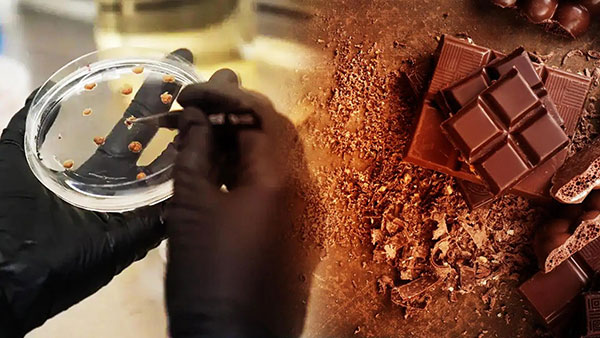
Global snacking major Mondelēz International has successfully created a batch of chocolate bars using cell-cultured cocoa butter developed by Israeli startup Celleste Bio, marking a significant step toward commercializing lab-grown cocoa ingredients.
The milestone demonstrates that Celleste’s technology can replicate conventional cocoa butter—one of chocolate’s most critical ingredients—while maintaining the same texture, melt profile, and sensory experience. The startup supplied the cocoa butter, while Mondelēz, maker of Toblerone, produced the finished chocolate bars as part of its role as a strategic partner and investor.
Celleste CEO Michal Beressi Golomb said the development validates the company’s platform and positions it to scale production and enter the market within the next two years.
“The need is real, and the business opportunity is significant,” Golomb said, noting strong interest from global chocolate manufacturers.
Celleste aims to produce up to 50,000 tonnes of cocoa butter annually by 2035—around 5% of global demand—using cell-cultured technology. The process enables production in bioreactors from a single cocoa bean, potentially replacing land-intensive farming that typically requires hectares of cocoa plantations.
Importantly, the company positions its solution as a supplement rather than a replacement for traditional cocoa farming, aiming to address supply gaps in a growing global chocolate market.
Cocoa butter, the primary fat in chocolate, is essential for its signature richness and mouthfeel. Chocolate manufacturers collectively spend an estimated $16 billion annually on cocoa ingredients, with cocoa butter accounting for nearly half of that.
The innovation comes at a time when cocoa prices have been highly volatile due to climate change, supply disruptions, and labour challenges, with production reportedly dropping sharply in recent years. These pressures have pushed major players, including The Hershey Company, to raise prices and rethink sourcing strategies.
Mondelēz, the world’s second-largest chocolate company, has responded by diversifying its portfolio—introducing filled chocolates and premium offerings—while also investing in alternative ingredient solutions like Celleste.
Other global players are also exploring substitutes. Nestlé, for instance, is preparing to launch a cocoa-free chocolate alternative in Europe using plant-based ingredients.
Celleste’s breakthrough highlights a broader shift in the chocolate industry toward innovation-driven sustainability. With global demand continuing to rise and traditional cocoa supply under strain, cell-cultured ingredients could emerge as a viable complement to conventional sourcing.
As large food companies deepen investments in food-tech solutions, the success of such collaborations may redefine how chocolate is produced in the years ahead.