

Amazon has signed a $30 million (approximately ₹280 crore) agreement to purchase carbon credits generated by Indian rice farmers, marking one of the largest agricultural carbon credit deals globally and the first of its scale in India.
The deal has been inked with the Good Rice Alliance, an entity backed by Bayer, GenZero, and Shell.
The agreement will enable Amazon to offset a portion of its global emissions as part of its broader net-zero commitments. The initial phase of the project is expected to generate more than 685,000 metric tonnes of carbon dioxide-equivalent credits.
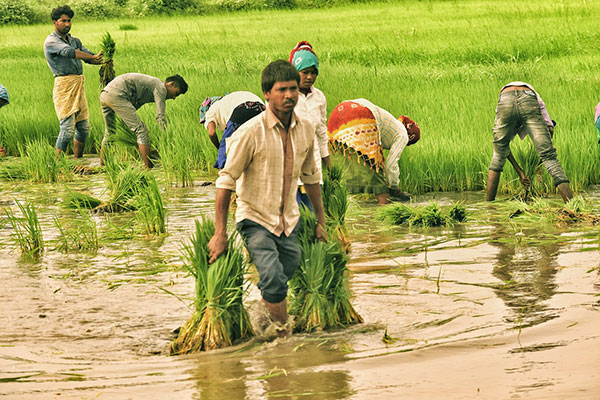
The initiative works with over 13,000 smallholder farmers across 35,000 hectares in India, promoting sustainable rice cultivation practices aimed at reducing methane emissions—one of the most potent greenhouse gases.
Traditional rice farming methods, which involve flooding paddy fields, contribute an estimated 8–10% of global methane emissions, making it a major source of agricultural pollution. India, the world’s largest rice producer, is also among the top methane emitters globally.
The programme encourages farmers to adopt improved water management techniques such as alternate wetting and drying and direct-seeded rice, significantly lowering methane output while maintaining productivity.
Methane has a global warming potential more than 27 times that of carbon dioxide, making its reduction critical for near-term climate action.
Beyond emissions reduction, the initiative provides farmers with training, field-level support, and financial incentives to transition toward sustainable practices. The model aims to create a dual benefit—enhancing farmer incomes while contributing to global climate goals.
The deal underscores increasing participation by large technology companies in carbon markets. Firms with significant carbon footprints are turning to carbon credits to offset emissions as they work toward sustainability targets.
Recent examples include Microsoft signing a soil carbon credit agreement valued between $171 million and $228 million, and Meta entering a forestry credit deal worth up to $16 million. Shell remains one of the largest buyers of carbon credits globally.
The development comes as India prepares to roll out its first formal carbon trading framework, with current activity largely limited to voluntary markets.
Amazon’s agreement signals a growing convergence between agriculture, sustainability, and global carbon markets, positioning Indian farmers as key contributors to climate solutions while opening new income streams in the process.