

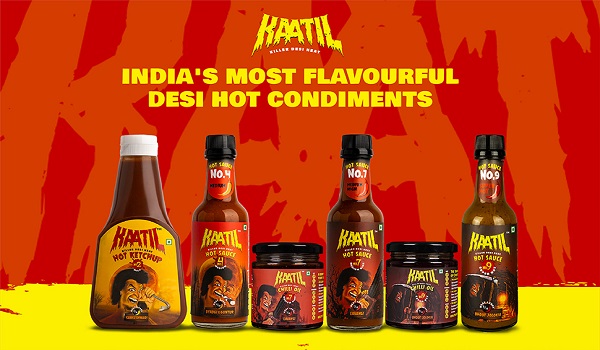
Mumbai-based condiment startup Kaatil is betting that India’s long-standing love for chilli heat can evolve into a large, organised packaged food category, with the company estimating a Rs. 20,000 crore opportunity in the country’s growing hot condiments segment.
Founded in 2022 by Sagar Merchant and Arjun Panwar, Kaatil is building a portfolio of hot sauces, chilli oils, barbecue sauces and hot honey products using region-specific Indian chillies while packaging them in globally familiar condiment formats.
The founders believe the Indian market has historically lacked a structured “heat-first” condiment category despite consumers consistently adding extra spice to meals through chutneys, pickles, schezwan sauces and regional accompaniments.
“Legacy brands have largely focused on ketchup and mayonnaise, while many newer brands are either cuisine-specific or simply adapting global flavours for India,” said Sagar Merchant, founder of Kaatil. “What was missing was a condiment category designed around the modern Indian consumer who moves across cuisines and meal occasions through the day.”
The company says changing food habits, exposure to international cuisines and the rapid growth of food delivery platforms have created demand for condiments that work across multiple formats, from Indian meals and snacks to pizzas, noodles and salads.
Kaatil’s products are built around chillies sourced from different Indian regions. Its Hot Sauce No. 4 combines Byadgi and Guntur chillies and is positioned around South Indian flavour notes, while Hot Sauce No. 7 uses Kolhapur’s Lavangi chillies for an achari-style profile. The company’s hottest offerings, including Hot Sauce No. 9, use Bhut Jolokia chillies.
The startup has also introduced a numbered heat-scale system across its products to help consumers understand spice intensity. Instead of descriptors such as “mild” or “extra hot”, products are categorized numerically, allowing consumers to identify and stick to their preferred heat tolerance across categories.
According to Arjun Panwar, strategy and digital head at Kaatil, the system simplifies consumer decision-making and creates consistency between product formats such as hot sauces, chilli oils and hot honey.
Kaatil’s best-selling product currently is its Bhut Jolokia-based Hot Sauce No. 9, followed by its barbecue sauce launched in November 2025. The company said hot honey has also emerged as a fast-growing category, reflecting rising consumer interest in sweet-and-spicy flavour combinations.
The brand operates through an omni-channel strategy spanning offline retail, quick commerce, direct-to-consumer sales, HoReCa and exports. Offline stores such as Foodhall and Nature’s Basket are being used primarily for product discovery and sampling, while quick commerce platforms like Blinkit and Swiggy Instamart are increasingly driving repeat purchases.
Kaatil currently derives around 25% of its revenue from D2C channels, 25–30% from offline retail and 15–20% from quick commerce, with the remaining contribution coming from HoReCa and exports.
The company has also partnered with cafés and restaurants in Mumbai, including Grounded Café, Pause Café, Sammy Sosa and Café Basilico, where its sauces are either served as condiments or integrated into menu offerings.
Merchant said HoReCa partnerships are less about conventional branding and more about building consumer familiarity with heat-led condiment formats before they scale into mainstream retail.
Interestingly, Kaatil said demand patterns have challenged several assumptions around geography and spice tolerance. While metros remain key markets, the company has seen growing traction from Tier 2 cities such as Indore, Surat and Baroda, especially for products like barbecue sauce and hot honey.
The startup also reported strong repeat demand for its Bhut Jolokia-based products from Northeastern states, indicating that globally styled condiment formats are resonating even in regions traditionally associated with indigenous chilli consumption.
India’s overall condiments market is currently estimated at Rs 35,000–40,000 crore, with ketchup and mayonnaise dominating organised retail shelves. However, Kaatil believes the broader “hot condiments” segment, including chilli sauces, schezwan variants and heat-based accompaniments, remains underdeveloped despite accounting for nearly half of condiment consumption patterns in the country.
Looking ahead, the startup plans to introduce nearly 10 new products over the next three years while expanding into bulk HoReCa packs, sachets, mini formats and differentiated packaging solutions.
“We are not just building a hot sauce brand,” Merchant said. “We are building a condiment brand where heat becomes the common language across products and eating occasions.”