

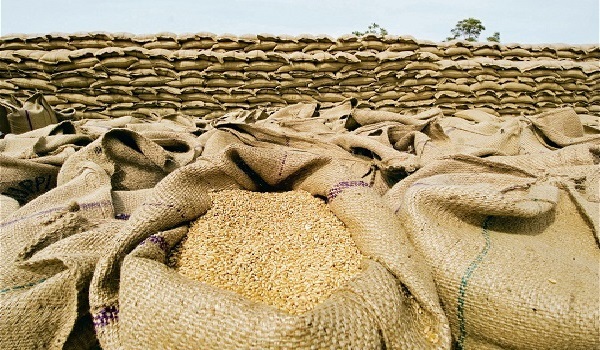
India’s foodgrain reserves held in the godowns of the Food Corporation of India (FCI) climbed to 604.02 lakh tonnes as of April 1, nearly three times higher than the prescribed buffer requirement of 210.40 lakh tonnes, according to official data.
The stockpile includes 386.10 lakh tonnes of rice against the mandated buffer norm of 135.80 lakh tonnes, while wheat reserves stood at 217.92 lakh tonnes compared to the required 74.60 lakh tonnes.
The Centre maintains buffer stocks of wheat and rice to ensure uninterrupted supply under the Public Distribution System (PDS) and various food welfare schemes. Buffer norms are revised every quarter, with the next revision scheduled for July 1.
Meanwhile, procurement operations for the 2026 rabi marketing season are currently in progress across major producing states.
Official estimates showed that nearly 97% of the wheat crop sown across 334.17 lakh hectares has already been harvested. Harvesting of pulses has also been completed in most regions.
Paddy harvesting, however, is still underway and has reached 59.32%, primarily in southern and northeastern states including Tamil Nadu, Kerala, Tripura, Andhra Pradesh and Telangana.
At the same time, wholesale prices of several key rabi crops continue to trade below the Minimum Support Price (MSP), raising concerns over market returns for farmers.
According to official data for the week ending May 1, wheat prices were ruling at ₹2,530 per quintal, about 2.13% below the MSP of ₹2,585 per quintal. Paddy prices declined 3.17% year-on-year to ₹2,294 per quintal.
Maize recorded a sharper drop, with prices falling 23.71% to ₹1,831 per quintal against the MSP of ₹2,400 per quintal.
Wholesale prices of pulses such as arhar and moong, along with bajra and sunflower, were also reported to be below their respective support prices.