

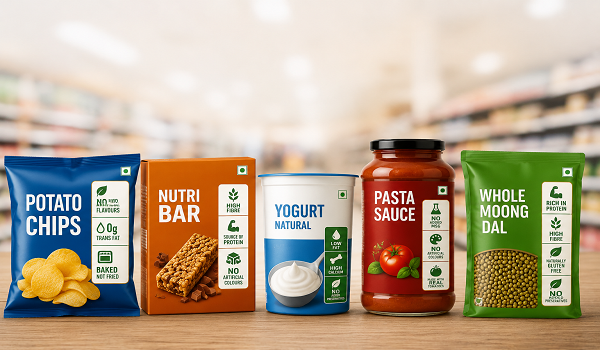
Several leading packaged food companies have begun introducing voluntary front-of-pack disclosures highlighting nutritional and ingredient-related information, even as long-pending regulations mandating standardized food labelling continue to await implementation.
Companies including PepsiCo India, Nestlé, ITC and iD Fresh Food have started displaying information such as sugar, salt, sodium, protein and fat content, along with claims like “no artificial colours,” “no artificial flavours,” and “no added preservatives” on selected products. The move comes amid growing consumer demand for transparency and increasing scrutiny of ingredient declarations on social media and other platforms.
Industry players say the changes are aimed at helping consumers make more informed purchasing decisions. PepsiCo India, for instance, has begun rolling out front-of-pack labels across its snack portfolio stating that products are made without artificial colours and flavours. Similarly, iD Fresh Food has updated packaging for some of its products to highlight the absence of added preservatives and soda.
Nestlé has introduced nutritional disclosures on select products such as Maggi noodles and Milky Bar, while ITC has added information related to sodium, added sugar, protein and trans fats on brands including Aashirvaad and Sunfeast Farmlite.
However, public health experts argue that these initiatives remain fragmented and insufficient. They contend that voluntary declarations vary significantly across companies and product categories, making it difficult for consumers to compare products effectively.
Health advocates have renewed calls for standardized, mandatory front-of-pack warning labels that clearly communicate levels of sugar, salt and saturated fats in packaged foods. According to experts, uniform labeling would provide consumers with clearer nutritional information and help address rising concerns over diet-related health issues.
Arun Gupta, convener of Nutrition Advocacy in Public Interest (NAPi), said that selective disclosures are limited in scope and may not significantly influence consumer behaviour. He emphasized the need for evidence-based warning labels that prominently indicate high levels of sugar, salt or fat in food products.
The debate comes as the Food Safety and Standards Authority of India (FSSAI) continues to deliberate on front-of-pack labeling regulations that have been under discussion for more than eight years. The proposed framework seeks to make nutritional disclosures mandatory and standardized across the packaged food industry.
Earlier this year, the Supreme Court directed FSSAI to move forward with regulations requiring front-of-pack warnings on products containing high levels of sugar, salt and saturated fats. In response, the regulator sought additional time to finalize the guidelines, citing the complexity of the issue and ongoing consultations with stakeholders.
Consumer groups and health experts argue that the delay has slowed efforts to improve public awareness about unhealthy food consumption. They maintain that mandatory labeling is essential for helping consumers make healthier dietary choices and for encouraging food manufacturers to improve product formulations.
As the regulatory process remains unresolved, food companies appear to be taking incremental steps toward greater transparency. However, experts believe meaningful change will require a comprehensive and uniform labeling framework applicable across the entire packaged food sector.