

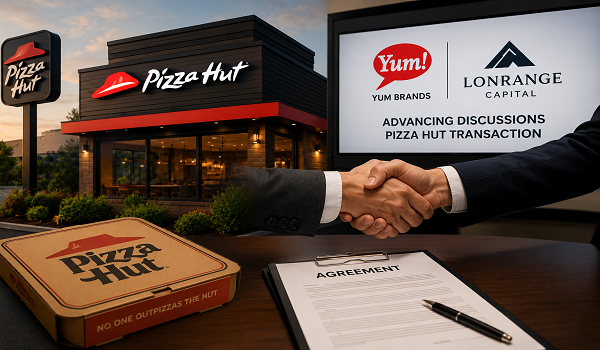
Yum! Brands is reportedly in exclusive negotiations with private equity firm LongRange Capital for a potential sale of its iconic pizza chain, Pizza Hut, as the fast-food giant seeks strategic alternatives for the underperforming business.
According to a source familiar with the matter, discussions between the two parties have progressed significantly, and a deal could be finalized within the coming weeks, although there is no certainty that an agreement will ultimately be reached.
The development follows Yum Brands’ announcement last year that it was evaluating strategic options for Pizza Hut, including a possible divestment, amid the brand’s continued struggle to match the performance of the company’s other restaurant chains, particularly Taco Bell.
Pizza Hut contributed approximately 12% of Yum Brands’ total revenue in 2025 but has faced persistent challenges in the U.S. market. Comparable sales at the chain have declined for ten consecutive quarters, reflecting weakening consumer demand and increasing competitive pressure in the pizza segment.
The broader fast-food industry is grappling with a difficult operating environment marked by rising inflation, elevated commodity costs, and softer consumer sentiment. Industry analysts also point to changing consumer preferences, including growing interest in healthier eating habits, which have affected demand across several restaurant categories.
Reports earlier this year indicated that multiple investment firms, including Sycamore Partners and Apollo Global Management, were exploring bids for Pizza Hut before LongRange Capital emerged as the frontrunner.
News of the potential transaction boosted investor confidence, with Yum Brands’ shares rising about 3% in extended trading. In addition to Pizza Hut, Yum Brands owns global quick-service brands KFC and Taco Bell.
The potential sale reflects a broader consolidation trend within the U.S. restaurant sector, where several chains have pursued mergers, acquisitions, or private ownership structures in response to mounting operational costs and slowing restaurant traffic.
The pizza segment, in particular, has seen increased deal activity. Industry reports suggest that Papa John’s International has also been exploring strategic alternatives, including a potential sale, as operators seek new avenues for growth amid challenging market conditions.
If completed, the transaction would mark one of the most significant restaurant-sector deals of the year and could reshape the future direction of the Pizza Hut brand under private equity ownership.