

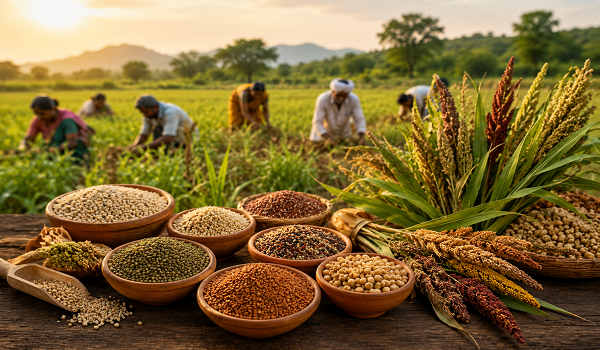
New GFI India report highlights climate-resilient traditional crops as future drivers of nutrition, food security, and the plant-protein economy
As India intensifies efforts to diversify its agricultural landscape and enhance nutrition security, experts are calling for renewed focus on indigenous “orphan crops” — traditional, protein-rich crops that have gradually disappeared from mainstream farming and consumption patterns.
A new report by the Good Food Institute India (GFI India) suggests that underutilized crops such as horse gram, winged bean, grass pea, lupin, bambara groundnut, and several native millets and legumes could play a crucial role in addressing the country’s protein deficit while improving climate resilience.
Despite being the world’s largest producer of rice, India continues to rely heavily on imports of pulses and edible oils. The report argues that this dependence highlights structural gaps in the country’s food and protein systems, which remain largely centred on a limited number of staple crops.
According to GFI India, many orphan crops offer significant advantages, including high protein content, lower input requirements, and greater tolerance to drought and climatic stress. These characteristics make them particularly relevant as agriculture faces increasing challenges from climate variability.
“Scientists and policymakers increasingly see these crops not as minor crops, but as strategic resources for future food and nutrition security, especially under climate variability,” said Padma Ishwarya S., Senior Scientist at GFI India.
The report also points to a major economic opportunity for India in the rapidly expanding global plant-based food sector. By developing ingredient supply chains around indigenous crops and investing in processing infrastructure, India could emerge as a significant supplier of plant-protein ingredients and value-added food products.
Countries such as Canada, Australia, the Netherlands and China have already built strong plant-protein ecosystems by commercializing alternative crops. GFI India believes a similar strategy could help India capture a share of the growing global market for plant-based meat, dairy alternatives and functional foods.
The organization estimates that the global plant-based meat market could reach between $88 billion and $368 billion by 2035, creating substantial export opportunities for Indian manufacturers and ingredient suppliers.
At present, however, India’s emerging smart-protein sector remains dependent on imported ingredients sourced primarily from China and Europe. Limited domestic availability of processing-grade peas, soybeans and chickpeas has contributed to this reliance, while import duties and logistics costs continue to raise production expenses.
The report identifies several obstacles to crop diversification. Decades of policy support for cereals through procurement systems, irrigation infrastructure, subsidies and assured markets have made crops such as rice and wheat less risky for farmers than pulses and oilseeds.
Farmers looking to shift towards alternative crops often face challenges including limited access to quality seeds, weak market linkages, inconsistent demand and inadequate technical support. In addition, post-harvest infrastructure, storage facilities and processing capacities remain underdeveloped in many regions.
GFI India notes that productivity levels for pulses and oilseeds also remain below potential due to uneven access to irrigation, mechanization and region-specific extension services. Meanwhile, cereals continue to benefit from stronger policy support and more stable marketing channels.
The report argues that future agricultural policies should move beyond a sole focus on grain yields and place greater emphasis on protein productivity per hectare. Such a shift, it says, would help meet rising demand for affordable, high-quality protein while supporting sustainable farming systems.
To unlock the potential of orphan crops, the report recommends targeted investments in crop identification, breeding programmes, protein extraction technologies and commercially viable supply chains. It also calls for greater collaboration between researchers, policymakers and industry stakeholders to accelerate adoption and create new market opportunities.
As concerns over nutrition security, climate resilience and import dependence grow, experts believe these neglected indigenous crops could become an important pillar of India’s future food system.
Corporate News