

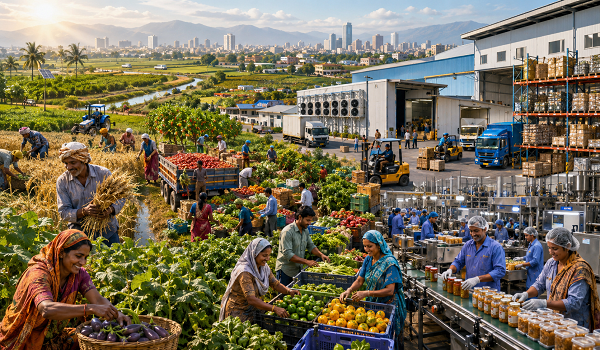
South Asia is entering a decisive phase in its development journey, where the transformation of food systems could become one of the strongest drivers of employment, investment and inclusive economic growth. With millions of young people joining the workforce every year, the region faces an urgent need to create sustainable and productive jobs beyond traditional agriculture.
The World Bank Group has highlighted that South Asia’s food systems hold enormous untapped potential, particularly beyond the farm. While the region’s agriculture sector is valued at more than $700 billion annually and employs nearly 43 percent of the workforce, its contribution to GDP remains around 16 percent. This gap clearly indicates the need to move from a production-focused model to a more value-driven food economy.
A major concern is food loss and waste. More than 30 per cent of food produced in South Asia is lost or wasted every year — enough to feed nearly 300 million people. Experts believe that reducing these losses through better storage, processing, logistics, cold chains and market linkages can create large-scale economic value while improving food security.
The next stage of agricultural growth, therefore, lies in strengthening activities such as food processing, warehousing, packaging, transportation, marketing and value addition. These sectors can generate millions of jobs, attract private investment, improve farmer incomes and build stronger food supply chains across the region.
India’s progress offers an important example. The country’s food grain production has grown from 51 million tonnes in 1950-51 to more than 330 million tonnes. Processed food exports have also more than doubled in the past decade, increasing from around $4.9 billion to over $10 billion. Today, the food processing sector contributes nearly 9 per cent of manufacturing value added and about 13 per cent of India’s exports.
Policy initiatives such as the Pradhan Mantri Kisan Sampada Yojana, the Pradhan Mantri Formalisation of Micro Food Processing Enterprises Scheme and the Production Linked Incentive Scheme for Food Processing Industries have helped strengthen infrastructure, modernise enterprises, encourage investment and improve the competitiveness of the sector.
However, the opportunity remains far from fully tapped. A large share of agricultural produce is still sold in raw form, while food processing accounts for only a small portion of total employment. Greater investment in cold chains, storage facilities, logistics networks, food parks and modern processing units can significantly enhance value creation across the food economy.
With rapid urbanisation, a rising middle class, rich agro-biodiversity and increasing demand for safe, convenient and high-quality processed foods, South Asia has the right fundamentals to become a global leader in food systems. A stronger push towards food systems transformation can help the region reduce waste, create jobs, increase farmer incomes and attract billions of dollars in future investment.