

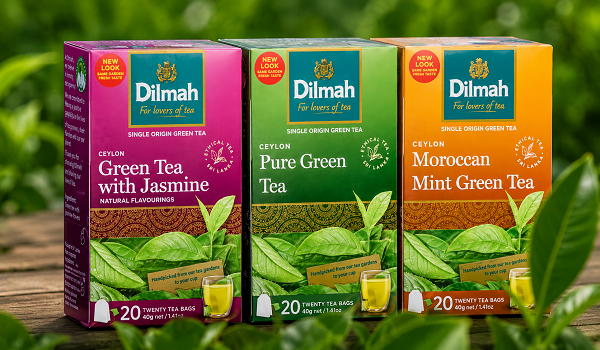
Sri Lankan tea major Dilmah is stepping up its India strategy with a premium, locally sourced portfolio, luxury hospitality partnerships and plans for a manufacturing facility in Coimbatore.
Sri Lankan tea company Dilmah is expanding aggressively in India, investing around $1 million over the past 14 months to develop a premium tea business tailored to the Indian market. The company aims to make India one of its top 10 global markets within the next decade.
As part of the expansion, Dilmah is launching Thambapanni, a premium tea collection created exclusively for India. The range uses tea, herbs and spices sourced from 26 Indian growers and will be packed locally.
The company plans to enter India in phases, beginning with luxury hospitality, followed by direct-to-consumer, quick-commerce and e-commerce channels. It also plans to establish its own Dilmah Urban Estate tea lounges in major cities.
“We are entering first into luxury hospitality, secondly through direct-to-consumer, q-commerce and e-commerce, and eventually through our own Dilmah Urban Estate tea lounges,” Dilhan C. Fernando, chairman of Dilmah, said.
Dilmah currently operates across 108 countries and has already partnered with around 15 hotels in India. The company plans to leverage its international relationships with hospitality groups including Hilton, Marriott, Accor and IHG.
Globally, luxury and premium hospitality accounts for around 40% of Dilmah’s business, making the segment a natural entry point for the company’s India strategy.
The company’s e-commerce operations are expected to go live by May 2027, while the first Dilmah Urban Estate flagship is targeted for the end of 2027. Franchising of the tea-lounge format is expected to begin in 2028.
The planned lounges will range from 500 sq ft to 2,000 sq ft and combine retail, tea tasting, food and co-working spaces. The concept is designed to recreate the atmosphere of a tea plantation within urban environments rather than operate as a conventional tea outlet.
22 products planned for India. Dilmah will initially introduce 22 SKUs, including 12 products under the Thambapanni collection. The portfolio will include pyramid tea bags and loose-leaf formats, with customised blends also planned as the company expands its premium offering.
Rather than compete directly with established Indian tea brands on price, Dilmah is positioning the business around premiumisation and consumer experience.
The company sees wellness, flavour discovery and conscious consumption as key trends among younger Indian consumers and plans to build its portfolio around these preferences.
The next phase of Dilmah’s India strategy will involve local manufacturing. The company plans to establish a 50,000 sq ft manufacturing facility in Coimbatore, with an initial investment of $10 million-$15 million. The investment could eventually increase to $25 million-$30 million.
The facility will primarily serve export markets, with Dilmah planning to begin shipments from India in 2028. The company is targeting exports of around 1 million kg in the first year.
Dilmah plans to focus on value-added tea products while expanding its local sourcing network rather than entering primary agriculture.
Beyond traditional tea. Globally, Dilmah generates around $550 million in sales value and is growing at an annual rate of 10-15%. Australia is currently its largest market, accounting for around 20-25% of revenue, followed by markets including New Zealand, Poland and Saudi Arabia.
India, however, represents a longer-term growth opportunity for the company. Dilmah expects the country to rank among its top 10 markets within the next 10 years.
The company is also diversifying beyond traditional tea into ready-to-drink iced tea, tea extracts and cinnamon products. Its ready-to-drink facility in Sri Lanka is expected to begin shipping by the end of 2026, as Dilmah looks to expand its global business through adjacent product categories.