

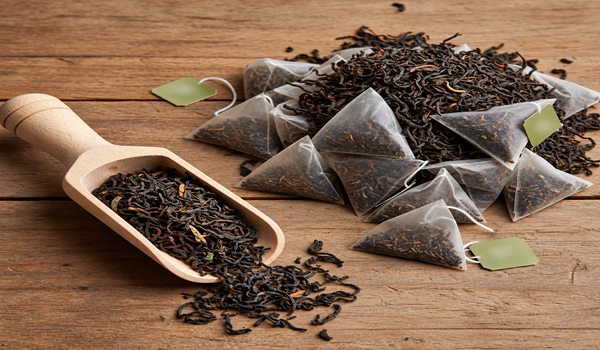
An industrial facility in Andhra Pradesh is emerging as a significant player in the global tea supply chain, producing three million flavoured tea bags every day for international retail giants such as Walmart, Aldi and Carrefour.
Everton Tea India, based in Sri City in Tirupati district, has built its business around value-added tea products, sourcing bulk tea from India’s leading tea-growing regions and converting it into private-label products for overseas markets. Its growth reflects the increasing global demand for herbal infusions, flavoured teas and other hot beverages positioned around health and wellness.
Although Andhra Pradesh is not traditionally associated with tea production, the state’s location and export infrastructure have helped Everton establish a large-scale manufacturing operation. The proximity of Chennai port offers logistical advantages for shipments to international markets.
“Bulk black tea exporters and select tea planters in Darjeeling and Assam are facing some headwinds. But, as value-adders, we see considerable room for Indian tea to grow in the European and US markets,” said Roshan Gunawardhana, director of Everton Tea India.
He added that consumers are becoming more health-conscious, while some European consumers are also shifting from coffee to tea, creating opportunities for manufacturers offering differentiated products.
Herbal and flavoured teas drive expansion
Everton’s product portfolio includes black tea, green tea and herbal infusions across as many as 40 flavours. Herbal varieties account for approximately 30% of its tea bags, with the remainder divided between green and black tea.
The company has increased daily production from 2.5 million tea bags to three million over the past three years. It sees further growth potential through product innovation and packaging, particularly as consumers seek greater variety and premium options.
The Sri City factory has also started producing gift-packaged tea bags to cater to growing demand in Europe, where packaged tea products are increasingly being positioned as gifting options.
The company’s strategy illustrates how Indian manufacturers can capture greater value by moving beyond bulk tea exports towards branded and private-label products tailored to the preferences of international consumers.
From two machines to a 24-machine facility
Everton Tea India’s manufacturing journey began in 2012 with two tea-packaging machines and a workforce of around 20 people. The facility has since expanded to 24 machines and employs approximately 300 people on the shop floor.
The company is a subsidiary of Everton SpA, which is primarily owned by Italian private-equity firm Clessidra Group. Its origins trace back to a family-run business established by an Italian entrepreneur and a Sri Lankan partner.
According to Ravindra Sannareddy, co-founder and managing director of Sri City, the company initially explored locations in Tamil Nadu because of their proximity to India’s tea-growing regions. It eventually selected Sri City, partly because of its access to Chennai port and the advantages offered by its industrial infrastructure.
The decision has helped establish an export-oriented tea manufacturing operation in a state better known for other industries than for tea processing.
Indian plantations remain the primary source
Around 90% of the tea processed at Everton’s facility comes from Indian plantations, including those in the Nilgiris, Darjeeling and Assam. The remaining 10% is sourced from Kenya and China.
Gunawardhana said the company imports Chinese tea to meet specific customer preferences rather than simply to obtain lower-cost raw materials. Different origins offer distinct flavour profiles, making sourcing flexibility important when supplying international retailers.
The trade figures underline the changing dynamics of India’s tea trade with China. India’s tea exports to China increased 40% year-on-year to $49 million in FY26, while imports from China declined from $12.2 million in FY25 to $8.5 million in FY26.
For Everton, the emphasis remains on combining Indian tea with selected international varieties to meet the requirements of different markets.
As global consumers explore more herbal, green and flavoured beverages, the company’s expansion highlights the opportunities available to Indian food processors that combine domestic agricultural sourcing with value addition, modern packaging and export-oriented manufacturing. Its next phase of growth will depend on sustaining product innovation and adapting to evolving consumer preferences across international markets.