

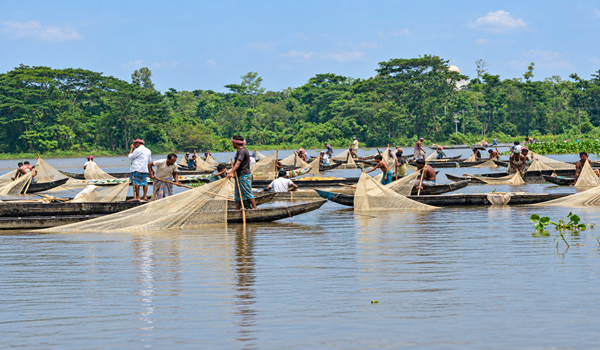
The Centre has stepped up consultations with fishing communities across India’s coastal regions to develop a national action plan aimed at securing sustainable small-scale fisheries, with an emphasis on livelihoods, resource management, working conditions and climate resilience.
The Union Department of Fisheries is leading the exercise, with the Bay of Bengal Programme Inter-Governmental Organisation (BOBP-IGO) facilitating and coordinating consultations. Community-led discussions have already been held in Kakdwip, West Bengal, and Baleswar, Odisha.
The Centre has also asked coastal states and Union Territories to organise consultations this month, appoint nodal officers or dedicated teams, and consolidate feedback from stakeholders for submission to the National Task Force drafting the plan.
More than 20 one-day consultations are scheduled across the eastern and western coasts and island territories as part of the effort to ensure that the proposed framework reflects the concerns of fishing communities.
“These consultations are not a formality to be completed before the plan is drafted. They are where the plan is written,” said Abhilaksh Likhi, Union Fisheries Secretary.
He said the exercise was intended to ensure that the proposed National Plan of Action reflects the priorities and concerns of fishing communities at the grassroots level.
Fishing communities to shape policy priorities
Alongside government-led consultations, a community-driven process is bringing together fisher organisations and civil society groups. Fourteen organisations have signed a Letter of Cooperation to participate in the exercise.
These include the National Federation of Small-Scale Fish Workers, National Fishworkers’ Forum, South Indian Federation of Fishermen Societies, District Fishermen’s Youth Welfare Association and Mahavir Machchhimar Sahakari Mandali.
Surabhi Rai, Joint Secretary in the Union Department of Fisheries, said the proposed framework needed to be grounded in the realities of fishing communities. The consultations would provide a platform to document the concerns of fishers and fish workers and incorporate them into the policy.
According to Rai, the livelihoods of around 30 million people in India are linked to fisheries and allied activities, making the sector important to the country’s food and nutritional security.
The consultations will be conducted in local languages and involve a broad cross-section of stakeholders, including fishing-boat crew members, share workers, migrant fish workers, fish vendors, dry-fish processors and young people.
Separate group discussions for women and young participants will be facilitated by women and youth representatives to encourage wider participation.
Sustainability, livelihoods and climate resilience in focus
The NPOA-SSF is being developed in accordance with the United Nations Food and Agriculture Organization’s Voluntary Guidelines for Securing Sustainable Small-Scale Fisheries and India’s National Policy on Marine Fisheries, 2017.
The proposed plan is expected to address access to fisheries resources, sustainable fisheries management, decent working conditions, gender equality, climate change and disaster risk.
Dr P Krishnan, Director of BOBP-IGO, said the consultation-led approach was intended to turn the proposed plan into an operational framework informed by conditions on the ground.
The emphasis on small-scale fisheries is significant because fishing communities face interconnected challenges involving resource access, environmental sustainability, employment security and exposure to extreme weather events. Incorporating their experiences into policymaking is expected to help align conservation objectives with the economic needs of fishing households.
BOBP-IGO is also coordinating similar initiatives in Bangladesh, the Maldives and Sri Lanka in collaboration with their respective governments.
Draft targeted for November 21
The draft NPOA-SSF is targeted for release on World Fisheries Day on November 21, 2026. This will be followed by a public review process, finalisation and formal notification in 2027.
The consultation process will be an important step in determining how the national framework translates into practical measures for fishing communities. Its effectiveness will ultimately depend on how the recommendations are incorporated into the final plan and implemented across India’s diverse coastal regions.