

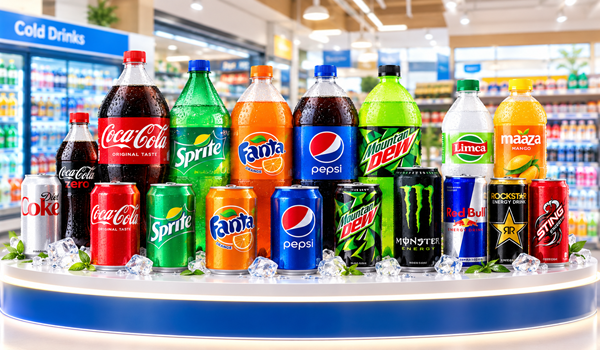
Energy drinks are among the fastest-growing products in India’s soft drink market. Industry leaders say colas are not losing ground, though. Instead, the shelf around them is getting more crowded.
Ken Research values India’s energy drink market at USD 1.135 billion in 2026 and expects it to nearly double to USD 2.245 billion by 2031, a compound annual growth rate of 12.04%. Euromonitor estimates that energy drink volumes in the country grew 21% in 2025.
A handful of large players control most of the category. PepsiCo India (Sting), Red Bull India, Monster Beverage Corporation (Monster Energy and Predator), Reliance Consumer Products (Campa Energy) and HELL ENERGY compete at both ends of the market, from Rs 20 PET bottles to premium cans.
Prabhu Gandhikumar, CEO and co-founder of TABP, said cheaper formats are bringing energy drinks to consumers who once found them too expensive to try. He cautioned against reading this as a move away from colas, since people buy different drinks for different occasions.
Lagan Shastri, CEO of SLMG Beverages, agreed. Energy drinks are growing faster but from a smaller base, he said, while colas still have far greater scale. “Consumer preferences are broadening, not simply shifting away from cola,” Shastri said. He added that sparkling, fruit-based, energy and zero-sugar drinks each serve different occasions.
Much of that broadening comes from affordable prices. In smaller towns and rural areas, single-serve packs and low price points help brands reach shoppers who buy small amounts often. Shastri called affordable single-serve packs a key growth driver and stressed the need for the right pack-price mix and wide availability of chilled drinks.
At TABP, Rs 10 is the best-selling and fastest-moving price point. Gandhikumar said shoppers usually decide based on how much they can comfortably spend at that moment, not the value per litre of a larger pack. The company has applied the same thinking to a new Rs 10 mojito.
The neighbourhood shop remains the key point of sale. Kirana stores, local shops and bakeries are still the main channels, and quick commerce is becoming an additional one. TABP added roughly 8,000 to 10,000 outlets in the past 12 months and now reaches about 90,000 shops across Tamil Nadu, Kerala, Karnataka, Andhra Pradesh, Telangana, Maharashtra and Odisha. Gandhikumar said the company’s distribution decisions start with local demand, the right range of products and reliable restocking.
Shastri acknowledged the growing role of quick commerce but called kiranas the backbone of distribution. SLMG is working with The Coca-Cola Company to improve availability, tailor product ranges to each channel and expand digital activation.
The two companies’ portfolios show how varied demand has become. At SLMG, which operates in Uttar Pradesh, Uttarakhand and Bihar, sparkling drinks drive most growth, and Thums Up is among its top sellers. Its newer launches include Sprite Zero, Thums Up Charged and Rimzim Jeera, and zero- and low-sugar variants are among its faster-growing lines. At TABP, which was founded in 2018, juices are the largest category and Plunge is the lead brand. Pineapple and lemon salt are its fastest-growing flavours, and it has recently added jelly juice and nannari.
The wider market is expanding as well. Redseer estimates that India’s non-alcoholic ready-to-drink market, which covers soft drinks, fruit drinks and packaged water, was worth USD 20 billion in 2025 and could reach USD 40 billion by 2030, growing about 14% a year. Gandhikumar expects 12–15% annual growth over the next couple of years, though he noted that weather can affect demand.
Cola still leads India’s beverage shelf, but energy drinks, fruit-based drinks and low-sugar options are now growing quickly alongside it.