

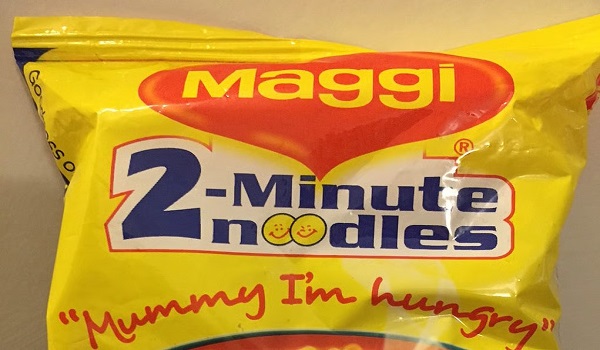
More than a decade after the Maggi noodles controversy shook India’s food industry, the Delhi High Court has quashed two criminal complaints and all related proceedings against Nestlé India officials, ruling that continuing the prosecutions would amount to an abuse of the legal process in light of subsequent scientific findings and judicial rulings.
Justice Madhu Jain set aside the trial court’s summoning orders issued in November 2015 and January 2016, along with all consequential proceedings, observing that the very foundation of the prosecution had been substantially weakened by later developments.
The criminal complaints originated from the nationwide food safety investigation launched in 2015 after samples of Maggi Noodles collected in Delhi allegedly showed lead levels above the permissible limit and raised concerns over the product’s “No Added MSG” claim. Based on those findings, authorities initiated proceedings under the Food Safety and Standards Act, 2006.
However, the High Court noted that the legal landscape had changed significantly since then. It referred to the Bombay High Court’s decision overturning the nationwide ban on Maggi, the Supreme Court’s direction for fresh testing by the Central Food Technological Research Institute (CFTRI), Mysuru, and subsequent proceedings before the National Consumer Disputes Redressal Commission (NCDRC), all of which relied on updated scientific evidence.
Fresh tests conducted by accredited laboratories and the CFTRI found the lead content in Maggi samples to be within permissible limits, substantially weakening the prosecution’s original case.
“The continuation of the complaints would merely compel the petitioners to undergo a protracted criminal trial despite the very foundation of the prosecution having substantially eroded,” the Court observed while exercising its inherent powers under Section 482 of the Code of Criminal Procedure.
The State argued that the criminal complaints had been filed in accordance with statutory procedures and that subsequent judicial decisions concerning the nationwide ban did not automatically invalidate individual prosecutions based on Delhi samples. It also contended that the accused had not exercised their right to seek referral analysis at the relevant time.
The High Court, however, held that the prosecution rested entirely on the original Food Analyst reports, whose evidentiary value had been significantly diluted after the Supreme Court-supervised scientific re-evaluation by CFTRI. It observed that while criminal proceedings generally stand on their own merits, courts cannot ignore subsequent scientific evidence that directly impacts the basis of a prosecution.
The Court also relied on similar rulings by the Himachal Pradesh and Uttarakhand High Courts, which had earlier quashed criminal proceedings arising from the same 2015 Maggi controversy after considering the CFTRI findings and Supreme Court directions.
The verdict marks another significant legal victory for Nestlé India in one of the country’s most high-profile food safety disputes, effectively bringing to a close another set of criminal proceedings stemming from the 2015 Maggi noodles episode.