

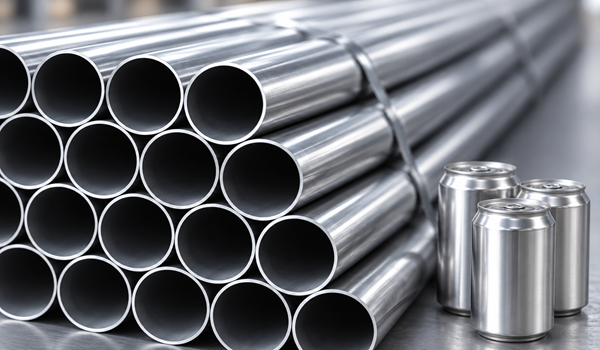
Rising beverage demand, limited domestic production and costly imports put pressure on manufacturers ahead of the 2027 summer season.
India’s beverage industry is grappling with a shortage of nearly 300 million aluminium cans as domestic production struggles to keep pace with rising demand from soft drink and beer manufacturers. In a move aimed at easing supply pressures, the government has extended the deadline for mandatory Bureau of Indian Standards (BIS) certification of aluminium beverage cans to 2027.
The decision comes at a crucial time for beverage companies, which are facing packaging shortages, higher import costs and delays in capacity expansion. Leading beverage brands, including Diet Coke and several beer labels, have reportedly experienced supply disruptions as demand for canned beverages continues to grow.
According to industry estimates, domestic manufacturers had planned to add 600 million cans to production but managed to deliver only around 300 million, leaving a substantial supply gap.
Vinod Giri, Director General of the Brewers Association of India, highlighted the growing mismatch between demand and manufacturing capacity, warning that the shortage could affect production planning ahead of the peak summer season.
Demand Surges, Production Falls Behind
Aluminium cans are rapidly gaining popularity in India’s beverage market, driven by changing consumer preferences, convenience and increasing demand for packaged drinks.
Canned beer and soft drinks now account for more than 25% of annual sales in their respective categories, with their market share doubling over the past two years.
However, domestic manufacturers have been unable to expand production at the same pace. Existing facilities are operating near capacity, while establishing new manufacturing lines can take up to a year.
The shortage has created difficulties for beverage companies seeking to build inventories before summer, traditionally the strongest sales period for carbonated drinks and beer.
Industry representatives believe the additional time granted for BIS compliance will help manufacturers improve procurement planning and secure adequate packaging supplies for 2027.
Imports Offer Relief but Increase Costs
To bridge the domestic supply gap, beverage manufacturers are increasingly sourcing aluminium cans from the United Arab Emirates, Sri Lanka and Southeast Asian countries.
However, imported cans are estimated to cost 25–30% more than locally manufactured alternatives, increasing packaging expenses and putting pressure on operating margins.
International supply uncertainties have further complicated procurement. Geopolitical tensions in the Middle East have disrupted supply chains and created concerns over the availability of empty cans in overseas markets.
Even foreign manufacturers holding BIS certification have reportedly struggled to meet India’s expanding requirements.
The combination of limited domestic capacity and expensive imports has raised concerns over production costs, particularly for beverage companies competing in price-sensitive markets.
BIS Compliance Extended in Phases
Under the revised schedule, large manufacturers must obtain mandatory BIS certification by April 1, 2027, followed by small enterprises on July 1 and micro enterprises on October 1.
The earlier compliance deadline was October 31, 2026.
Introduced through a quality control order in April 2025, the certification requirements seek to ensure that aluminium beverage cans meet prescribed standards covering material quality, dimensions, sealing, pressure resistance, leakage prevention and protective coatings.
The certification process applies to domestic and international manufacturers, with overseas factory inspections potentially extending approval timelines.
Industry Faces Crucial Capacity Test
While the deadline extension provides immediate regulatory relief, industry experts caution that it will not automatically resolve the production shortage.
Manufacturers must accelerate capacity expansion, strengthen supply chains and reduce dependence on expensive imports to support sustained market growth.
With canned beverages becoming an increasingly important segment of India’s drinks industry, the coming months will test manufacturers’ ability to balance growing demand, regulatory compliance and competitive packaging costs.
The central challenge is no longer simply meeting certification requirements, but ensuring that India’s aluminium can manufacturing capacity grows fast enough to support its expanding beverage market.