

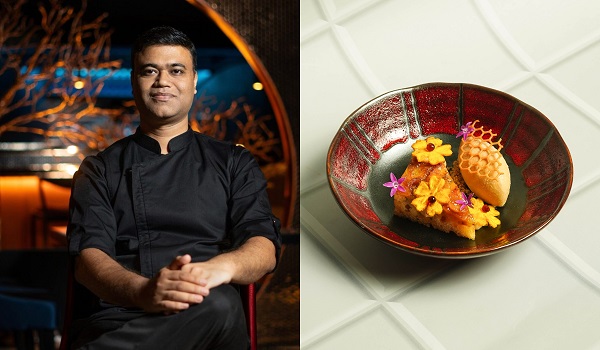
Food presentation at India’s leading restaurants is evolving beyond decorative garnishes and elaborate arrangements, with chefs increasingly using plates, vessels and customised tableware to create a narrative around the food being served.
At several fine-dining restaurants, the plate itself is becoming part of the dining experience, chosen not only for visual impact but also to communicate the origin, character or inspiration behind a dish.
At Tresind Mumbai, head chef Sarfaraz Ahmed has accumulated more than 10,000 plates along with bespoke crockery and tableware sourced from different parts of the world. Nearly half of the restaurant’s crockery comes from Dutch tableware maker Studio RAW. With around 60–75 guests served during dinner and tasting menus sometimes extending to 14 courses, menu changes can also require corresponding changes in plates and cutlery.
Ahmed says presentation begins only after considering the ingredients, flavours and textures of a dish, while practical eating remains central to the decision.
At Raga by Gaggan in Delhi, chef and co-founder Rydo Anton uses plating to create curiosity before guests understand what they are about to eat. The restaurant’s Golden Egg presents familiar pani puri-inspired flavours through a gilded egg resting on a crisp nest. Another creation, Lick It Up, appears as a painted popsicle on a plate and is designed to be eaten directly from the surface.
Indian Accent has similarly used unusual vessels as part of its presentation. Its palate cleanser has appeared in a miniature toy pressure cooker, while shorba has been served in clay vessels and other dishes in customised miniature copper pans.
At Bengaluru’s Farmlore, chef Johnson Ebenezer has used a hand-glazed ceramic map of Karnataka as a serving surface, while other vessels draw inspiration from natural landscapes. Nila chef Rahul Sharma uses rocks inspired by the Indus-Zanskar landscape to connect guests with Ladakhi food culture. One dish uses a hollowed turnip as the vessel for custard and pickle prepared from the same vegetable.
Food expert, television host and author Rashmi Uday Singh says Indian plating has moved considerably beyond the earlier focus on decorative crockery, sauce patterns and edible flowers.
International travel, gastronomic tourism, restaurant awards, molecular gastronomy, higher disposable incomes and social media have all influenced the transformation.
Chefs, however, are also cautioning against presentation becoming theatre without purpose. Indian Accent executive chef Shantanu Mehrotra believes every element should serve a function, while Masque executive chef Varun Totlani stresses usability, ensuring sauces do not spill and diners can comfortably reach every part of the dish.
Social media has made visual presentation increasingly important because photographs can communicate appearance but not taste. For chefs, the challenge is therefore to make the plate memorable without allowing its visual appeal to become more important than the food itself. Pasted text