

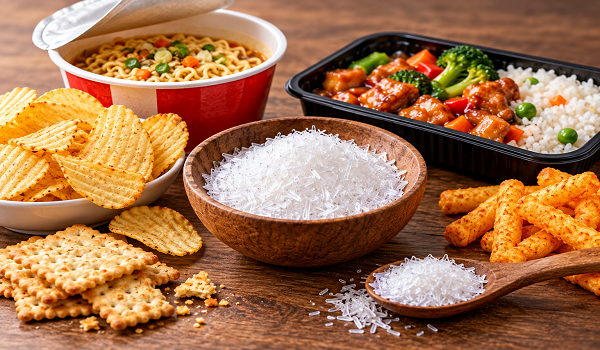
The global monosodium glutamate market is expected to maintain steady growth through 2035 as increasing consumption of processed foods, convenience products, savoury snacks and foodservice meals continues to support demand for the flavour enhancer.
According to an IndexBox report, the global MSG market is projected to grow at a compound annual growth rate of around 3.2% in volume terms between 2026 and 2035. The market index is expected to reach approximately 137 by 2035 compared with a base of 100 in 2025.
MSG remains widely used across food manufacturing, particularly in Asia-Pacific, where it has a longstanding role in both household cooking and industrial food production. Urbanisation, rising disposable incomes and increased demand for convenient foods are expected to support consumption over the coming decade.
Processed foods represent the largest end-use category, accounting for an estimated 35% of global MSG demand. MSG is used in products including frozen meals, canned soups, sauces and ready-to-eat foods to strengthen umami flavour and, in some formulations, reduce reliance on salt.
Seasonings and condiments account for approximately 25% of consumption. Bouillon cubes, seasoning blends and soy-based sauces remain important applications, particularly across Asia-Pacific.
Snacks and savoury foods represent around 20% of global MSG demand. Potato chips, crackers and extruded snacks commonly use MSG to strengthen savoury flavour profiles. Demand from the segment is expected to benefit from the continuing expansion of packaged snacking in emerging markets.
Foodservice accounts for an estimated 15% and is expected to be among the fastest-growing end-use channels through 2035. The expansion of quick-service restaurants, restaurant chains and foodservice businesses, together with growing international interest in Asian cuisines, is supporting wider use of MSG in menu applications.
Asia-Pacific dominates consumption with an estimated 65% share of global demand. China, Indonesia and Vietnam are important production and consumption centres. Europe accounts for around 12%, North America approximately 10%, Latin America about 8%, and the Middle East and Africa roughly 5%.
Production is concentrated among large fermentation-based manufacturers, particularly in China and Southeast Asia. Major companies identified in the report include Fufeng Group, Meihua Holdings Group, Ajinomoto, Vedan International, CJ CheilJedang and several other Asian producers.
The industry nevertheless faces challenges from volatile prices of inputs such as molasses, sugarcane and starch, along with trade barriers, labelling requirements and clean-label trends. Alternative flavour enhancers such as yeast extracts and hydrolysed vegetable protein also compete with MSG.
Despite these pressures, the report expects the market to remain resilient, supported by continued growth in processed foods, snacks and foodservice, with Asia-Pacific remaining the centre of global MSG production and consumption.