

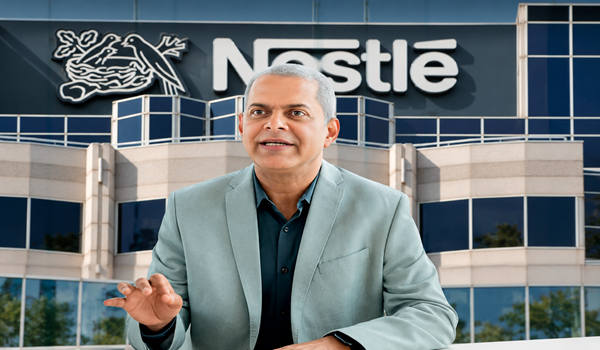
Nestlé India has cautioned that food inflation and volatile commodity prices continue to challenge the packaged food industry, even as the company delivered strong revenue and profit growth in the September quarter of FY27.
“Rising inflation, particularly food inflation, is a reality,” Manish Tiwary, chairman and managing director of Nestlé India, said in the company’s quarterly earnings commentary on October 15.
The company said cocoa prices remain volatile amid weather-related concerns in key producing regions. Sugar and edible oil prices have stabilised at elevated levels, while milk prices have strengthened seasonally. Milk costs could moderate as supplies increase during the flush season, it added. Coffee and wheat prices are expected to remain within a relatively narrow range.
Nestlé India plans to counter these pressures through product innovation, portfolio renovation and tighter operational controls, while continuing to invest in its brands.
The company’s total sales rose 20.5% year-on-year to ₹6,782.2 crore during the quarter, supported by double-digit volume growth across product groups. Profit after tax increased 36.3% to ₹1,026.8 crore, while EBITDA margin stood at 23.8%.
Advertising and marketing expenditure increased 46% during the period, underlining the company’s continued focus on brand building despite the uncertain cost environment.
Confectionery and rural markets support growth
Nestlé India’s confectionery business recorded another quarter of double-digit, volume-led growth. KitKat continued to gain market share, while Munch and Milkybar also maintained momentum.
The performance comes at a time when cocoa price fluctuations are creating cost pressures for chocolate manufacturers. Sustaining growth without allowing higher input costs to erode profitability remains a key challenge for the category.
The company also reported double-digit growth in general trade across town classes, with rural markets leading the expansion. E-commerce sales benefited from continued momentum in quick commerce, reflecting the growing importance of digital channels in packaged food distribution.
For Nestlé India, the combination of stronger volumes and increased marketing expenditure indicates an effort to strengthen consumer demand while navigating commodity uncertainty.
The broader challenge will be to sustain this momentum if food inflation persists. With several key inputs remaining expensive, productivity improvements, pricing decisions and product mix will be crucial in determining how effectively the company protects margins while continuing to invest in growth.