

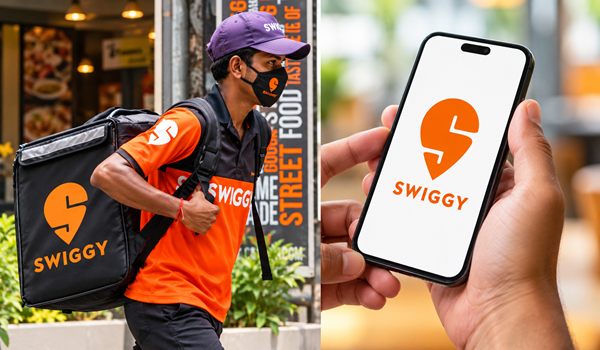
Food delivery platform Swiggy has introduced a multi-restaurant ordering feature on its app, allowing customers to order dishes from as many as five restaurants through a single checkout, as the company looks to improve convenience ahead of the festive season.
The feature enables users to combine different cuisines in one transaction without creating separate orders and completing multiple payment processes. According to the company, customers can maintain multiple carts, compare their selections and pay once, avoiding repeated one-time passwords and checkout procedures.
The initiative also aims to reduce the additional platform fees associated with placing separate orders. However, the company has not disclosed the extent of savings customers can expect.
Orders from different restaurants will continue to be prepared and delivered independently. Customers can track the individual orders through a shared tracking screen, with each restaurant’s order displayed separately.
Sidharth Bhakoo, chief business officer of Swiggy Food Marketplace, said the feature gives customers greater flexibility to combine dishes from different restaurants, allowing households and groups to accommodate varied food preferences through a single payment.
Swiggy cited consumer research indicating that 55% of users create two carts during a single session, while one in five places a second order within 30 minutes of the first. The company believes the new feature could address the inconvenience of managing multiple carts and reduce the need for customers to place orders at different times.
The service is currently available in 720 cities.
The launch reflects food delivery platforms’ broader efforts to improve ordering convenience and encourage customers to consolidate their purchases within a single app. By allowing users to mix cuisines and restaurant choices, Swiggy is seeking to address a common challenge in group dining while potentially reducing abandoned carts and fragmented orders.
The feature’s impact will depend on how effectively it reduces the cost and complexity of multi-restaurant ordering without compromising delivery coordination or the customer experience.