

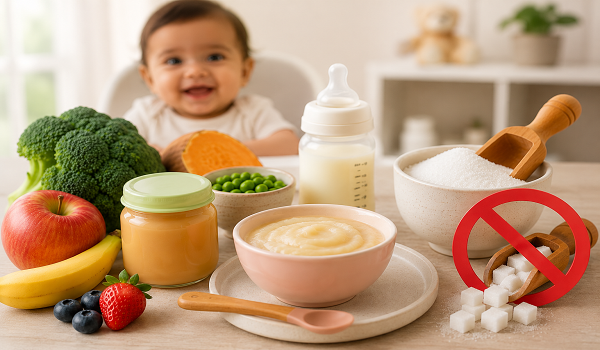
A Parliamentary Standing Committee has called for stricter regulation of sugar content in infant food products, recommending tighter oversight, mandatory front-of-pack sugar disclosures and enhanced inspections to protect children’s health.
In its report on “Regulation of Packaged Commodities with Specific Reference to Sugar Content in Baby Products and Other Food Products,” tabled in Parliament, the Standing Committee on Consumer Affairs, Food and Public Distribution urged the government to periodically review permissible sugar limits in infant nutrition and strengthen enforcement by the Food Safety and Standards Authority of India (FSSAI).
The committee recommended that sugar levels in infant formula, follow-up formula, cereal-based complementary foods and packaged traditional infant foods be carefully regulated and aligned with recommended dietary guidelines. It also called for greater emphasis on developing products with minimal or no added sugar.
Highlighting the vulnerability of infants, the panel noted that excessive sugar consumption from packaged baby foods could contribute to long-term health risks, including dental caries, obesity, metabolic disorders and other chronic diseases. It stressed that ensuring the nutritional safety of complementary foods for children between six months and two years of age must remain a public health priority.
Among its key recommendations, the committee proposed mandatory front-of-pack declarations for infant and children’s food products containing added sugar. Labels should clearly disclose the quantity of added sugar per serving and indicate its contribution to the recommended daily energy intake for the target age group. It also suggested amending existing food laws and regulations wherever necessary to implement the proposal.
The panel further urged the government to strengthen consumer awareness campaigns under initiatives such as Eat Right India, using simplified messaging based on recommendations from the World Health Organization (WHO) and the Indian Council of Medical Research (ICMR). It recommended targeted outreach through schools, anganwadis, maternity clinics and digital platforms to educate parents and caregivers about healthy infant nutrition.
While acknowledging that India’s current sugar limits for infant foods broadly align with international standards, the committee emphasised that nutrition science continues to evolve. It recommended that FSSAI’s scientific bodies undertake systematic reviews of permissible sugar limits every two to three years to ensure regulations remain consistent with emerging evidence.
The report also called for stronger regulatory surveillance. Although more than four lakh food safety inspections were conducted across India during 2024-25, only around 1,100 inspections covered infant food manufacturing units. The committee observed that despite infant food businesses being classified as high-risk under FSSAI’s Risk-Based Inspection System (RBIS), inspections dedicated to this segment remain disproportionately low.
To address this gap, the panel recommended granting infant and baby food products “priority enforcement status” by reserving a defined minimum percentage of annual inspections and food sampling specifically for the category.
In addition, it asked FSSAI to publish separate compliance data on infant and child food products in its annual reports, including details of inspections, samples analysed, non-compliance rates, sugar-related violations, enforcement actions and corrective measures taken.
The recommendations come amid growing scrutiny of sugar levels in packaged infant foods and reflect increasing policy focus on strengthening nutritional standards and transparency in products intended for the country’s youngest consumers.