

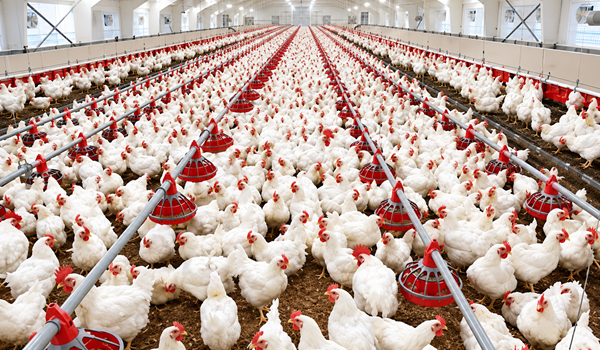
Rising livestock feed costs are putting poultry and dairy farmers under growing financial pressure, with poultry farmers reporting losses of around 15% as higher input costs collide with weak consumer demand.
Prices of key feed ingredients have climbed sharply, increasing production costs for farmers who are finding it difficult to pass on the additional burden to consumers. Industry executives say the price surge is also squeezing feed manufacturers, as expensive products and subdued demand put pressure on margins.
Mustard meal prices have increased by 75%, while deoiled rice bran meal has become 68% costlier. Corn-based distillers dried grains with solubles (DDGS) have risen 66%, and groundnut meal prices are up 43%. Maize prices have increased by 8%.
The steep rise in feed ingredient costs is particularly affecting poultry farmers, for whom feed represents a major share of production expenses. With selling prices failing to keep pace with rising costs, many producers are struggling to maintain profitability.
Dairy farmers are facing a similar challenge, particularly in drought-affected regions where the availability of fodder has become increasingly uncertain. Limited supplies and higher procurement costs are adding to the financial burden of maintaining livestock and sustaining milk production.
Maize shortage intensifies competition
The pressure on feed prices has been aggravated by competition between the poultry sector and ethanol manufacturers for maize supplies. A deficient monsoon has affected maize production, tightening availability and intensifying competition among industrial users.
Maize is an important raw material for animal feed, and any disruption in its supply can have a wider impact on poultry and dairy production costs. The growing demand from ethanol manufacturers has added another layer of pressure on feed buyers seeking to secure adequate supplies.
Industry associations have urged the government to ease maize imports to improve availability and moderate prices. They have also called for foodgrain stocks deemed unfit for human consumption to be released for use as livestock feed, subject to applicable safety and quality requirements.
Such measures, industry representatives believe, could help improve feed availability and provide some relief to farmers and manufacturers grappling with escalating input costs.
Weak demand limits price increases
The feed cost surge comes at a difficult time for poultry and dairy producers, as subdued consumer demand limits their ability to raise selling prices. Passing on higher costs could further affect consumption, leaving farmers caught between expensive inputs and constrained revenues.
Feed manufacturers are also facing pressure because higher ingredient prices increase production costs, while the resulting rise in feed prices dampens demand from farmers. This creates a difficult operating environment across the livestock value chain.
The continuing price rise highlights the sector’s vulnerability to weather-related production shortfalls, competition for agricultural commodities and fluctuations in feed ingredient supplies.
Industry stakeholders are seeking government intervention to improve raw material availability and ease cost pressures. Without relief, sustained high feed prices could continue to erode poultry farmers’ margins, strain dairy operations and affect the broader livestock industry.