

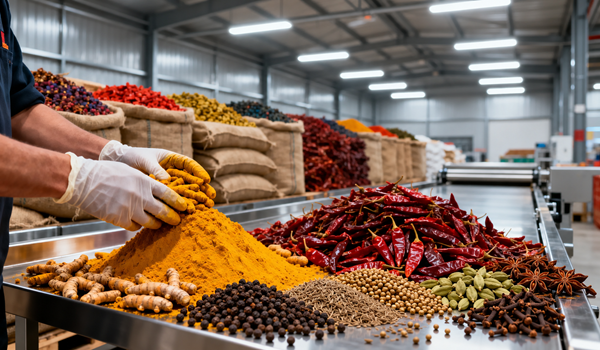
Uneven monsoon rainfall and persistent soil moisture shortages across southern India are threatening spice production, raising concerns over tighter supplies and elevated prices in the coming months.
The impact is being felt across major spice-growing states, including Karnataka, Andhra Pradesh and Tamil Nadu, where adverse weather conditions are affecting crop development. Low carry-over stocks from the previous season and expectations of stronger export demand are adding to the pressure on prices.
“Despite a higher area under spice cultivation, we can see an impact on yield due to the effect of El Niño, especially in Karnataka, Andhra Pradesh and Tamil Nadu,” said Sandeep Voddepalli, vice-president of BigHaat India.
He added that low stocks from the previous season and anticipated growth in export demand could keep retail spice prices elevated.
Turmeric output faces decline
Turmeric production is projected to decline by around 10% in 2026-27, despite a 10-15% increase in cultivated area, according to industry estimates. If dry conditions persist, the fall in output could deepen to 20-25%.
The production outlook is significant for India, which accounts for approximately 75% of global turmeric production and more than 60% of international trade in the spice. Any substantial decline in domestic output could therefore affect both local availability and export supplies.
Although farmers have expanded the area under cultivation, inadequate soil moisture and unfavorable weather could limit yields, offsetting the gains from increased planting.
Delayed chilli sowing adds pressure
Red chilli production is another area of concern. Sowing in Andhra Pradesh and Telangana has been delayed by nearly a month, primarily because of insufficient rainfall, according to a major spice exporter.
The delay is expected to push back harvesting, potentially tightening market supplies and keeping prices high for longer.
Cumin cultivation may also decline because of adverse weather and concerns over soil moisture. In contrast, coriander and celery acreage could increase, supported by low carry-over stocks and attractive market prices.
The outlook for individual spices remains mixed, but weather-related risks are emerging as a common concern for producers and traders.
Ginger and garlic prices remain high
Ginger and garlic prices have risen sharply in recent weeks, and industry experts expect the upward trend to continue amid supply concerns.
Wholesale prices of turmeric and dry red chillies increased by 23.37% and 35.96%, respectively, year-on-year in September. Garlic prices nearly doubled over the same period, according to the wholesale price data cited in industry reports.
The price increases come as food inflation has accelerated. Retail food inflation rose to 7.74% in September from 5.97% in August, while overall retail inflation increased to 5.54%.
Further increases in spice prices could add to household food costs and put pressure on food processors that depend on these ingredients.
The coming months will be crucial for the spice sector, as rainfall patterns, crop yields and export demand determine the extent of supply constraints. Unless weather conditions improve and production recovers, consumers and food businesses may continue to face elevated spice prices.