

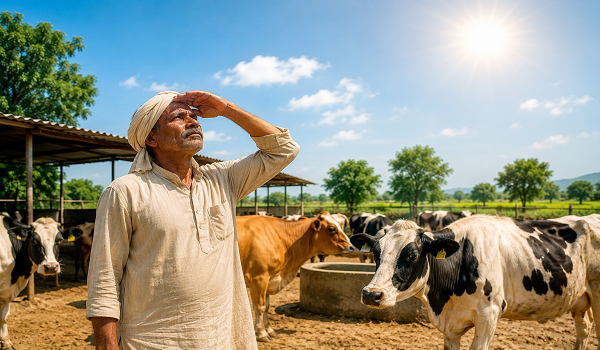
India’s dairy industry, the largest milk-producing sector in the world and a cornerstone of the country’s agricultural economy, is facing growing challenges from rising temperatures and increasingly frequent heatwaves. While India has achieved record milk production levels in recent years, experts warn that climate change is beginning to impact animal health, productivity, and farmer incomes across the sector.
For Neeraj Bharadwaj, a dairy farmer on the outskirts of Delhi, the effects of extreme heat became alarmingly clear last summer when one of his cows delivered a premature calf months before its expected birth. The calf was born weak, underdeveloped, and nearly hairless. Although survival seemed unlikely, Bharadwaj managed to save it through intensive care and bottle-feeding. Scientists say such incidents are becoming more common as prolonged heat stress affects livestock reproduction and overall health.
India accounts for nearly one-quarter of global milk production and relies heavily on millions of small-scale dairy farmers who typically own just two to five animals. The dairy sector contributes around 5% to the country’s GDP and supports the livelihoods of more than 80 million farmers. At the same time, rising incomes, urbanisation, and population growth are expected to drive dairy consumption significantly higher in the coming decades, potentially doubling demand by 2050.
However, increasing temperatures pose a serious threat to sustaining this growth. Experts note that heat stress causes cattle to consume less feed, produce lower quantities of milk, and experience fertility problems, miscarriages, and premature births. High-yielding breeds are particularly vulnerable because their elevated metabolic activity generates more internal body heat, making it harder for them to cope with extreme weather conditions.
“Milk production falls by nearly 30% during extreme heat,” Bharadwaj said, adding that farmers are being forced to spend more on cooling systems and animal care while earning less from reduced output.
India’s milk production reached a record 239 million tonnes during the 2023-24 fiscal year, reflecting growth of nearly 64% over the past decade. Much of this increase has been driven by crossbreeding programmes designed to improve productivity. However, researchers believe that many of these high-producing animals are also among the most susceptible to heat stress.
According to scientists at the National Dairy Research Institute (NDRI), extreme temperatures not only reduce milk volumes but also lower fat content, directly affecting farmer earnings since milk prices are often linked to quality parameters. To mitigate losses, farmers are investing in improved nutrition, cooling equipment, additional water supplies, and higher electricity usage.
Bharadwaj alone has spent nearly ₹2 lakh upgrading cattle sheds with better ventilation and heat-management systems, while annual maintenance costs add another ₹50,000. Although larger dairy farms in states such as Punjab are increasingly adopting advanced cooling technologies, such investments remain difficult for smallholders operating on thin profit margins.
Researchers are focusing on climate adaptation strategies, including improved housing, better nutrition, and the development of heat-tolerant cattle breeds. NDRI has already introduced a heat-resilient breed aimed at maintaining productivity under warmer conditions. Meanwhile, livestock insurer IBISA has expanded climate-related coverage, insuring more than 360,000 cattle and compensating farmers for heat-related productivity losses.
As another intense summer grips northern India, dairy farmers continue to adapt to rising temperatures. Experts believe that strengthening resilience through improved genetics, infrastructure, and animal management practices will be essential to securing the future of India’s dairy industry and meeting the country’s growing demand for milk.