

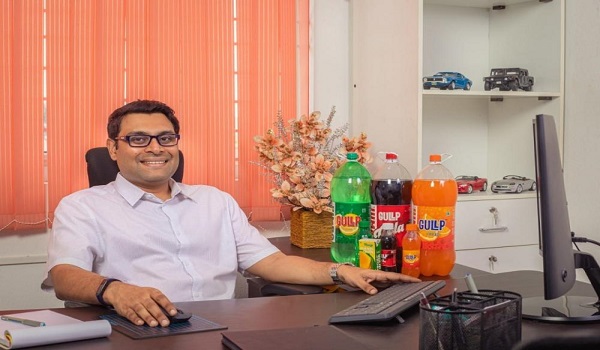
Packaged food and beverage company TABP has outlined an aggressive growth roadmap, aiming to nearly quadruple its revenue to ₹800 crore over the next three years, driven by a sharp focus on India’s mass-market consumers.
The company, which reported around ₹212 crore in revenue in FY26, is also targeting ₹40 crore in profit as it scales a business model built on affordability, hyper-local flavours, and deep distribution in underserved markets.
Founder Prabhu Gandhikumar said the strategy hinges on tapping demand among India’s bottom 600 million consumers—many of whom remain priced out of mainstream packaged beverage brands. By offering products at a ₹10 price point, TABP aims to convert beverages from an occasional indulgence into an everyday purchase.
“A bottle of cola was once a treat, not a habit, due to pricing constraints,” Gandhikumar noted, highlighting the affordability gap that continues to exist in smaller towns and semi-urban regions.
Rather than competing directly with global cola giants, TABP is building a diversified portfolio of region-specific drinks, including lemon-salt beverages for coastal climates and multiple variants of jeera-based drinks tailored to local taste preferences. The company believes that India’s fragmented palate creates an opportunity for multiple high-volume regional products rather than a single national blockbuster.
“We are aiming to build several ₹300–400 crore brands instead of chasing one large brand,” Gandhikumar said, underlining a decentralized growth approach designed to avoid direct competition with entrenched players.
Operationally, TABP is focusing on cost efficiency and proximity-led distribution. The company currently operates 12 manufacturing units—largely through third-party partners—with smaller, regionally distributed bottling lines that double as local supply hubs. This helps reduce logistics costs in a category where water constitutes the bulk of the product.
In contrast to many new-age consumer brands, TABP has deliberately stayed away from e-commerce and modern retail, choosing instead to prioritize traditional trade channels that dominate consumption in its target segments.
The company is currently strengthening its presence in southern and select western markets, betting that deeper regional penetration—rather than rapid national expansion—will unlock sustainable, high-volume growth in India’s evolving beverage landscape.