

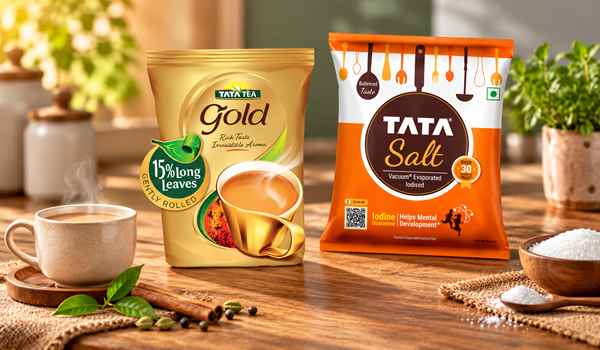
Tata Consumer Products is widening its growth strategy beyond its traditional tea and salt businesses, with new product categories gaining a larger share of revenue. The company reported a consolidated net profit of ₹469 crore for the July–September quarter of FY27, up from ₹404 crore in the corresponding period last year, supported by steady demand for packaged foods and beverages.
The maker of Tata Salt and Tetley tea is investing in emerging categories, including functional beverages, protein water and nutraceuticals, as it seeks to respond to changing consumer preferences and create new sources of growth.
The company’s growth businesses accounted for 38% of its India revenue in the second quarter, compared with 32% a year earlier. Managing Director and CEO Sunil D’Souza said the company now has four strong business pillars, reflecting its expanding portfolio beyond its established categories.
Tata Consumer’s growth portfolio expanded 47% during the quarter. D’Souza expects these businesses to maintain growth of more than 30% over time.
Innovation takes centre stage
Product innovation is becoming an important part of the company’s expansion strategy. Tata Consumer aims to generate 5% of its sales from innovation and launched 22 new products over 12 weeks during the reported period.
The company is also preparing to enter the protein water segment after completing quality checks. Its planned expansion into functional foods and nutraceuticals signals a broader effort to tap into growing consumer interest in products offering benefits beyond basic nutrition.
Digital technology is another priority. The company is exploring artificial intelligence (AI) to improve sales, distribution and operational efficiency, while also identifying opportunities to generate additional revenue. Its broader strategy focuses on strengthening core businesses, developing new categories, improving execution, building digital capabilities and integrating sustainability into operations.
Salt and premium foods deliver
While new categories are attracting attention, established businesses continue to support the company’s performance.
Tata Salt recorded 15% revenue growth and 9% volume growth during the quarter, despite price increases. However, India tea and coffee reported flat volumes and a marginal decline in revenue, reflecting relatively subdued demand.
Tata Sampann, the company’s premium staples brand, delivered 57% revenue growth, largely driven by higher volumes. Its dry fruits and cold-pressed oils businesses together reached an annualised revenue run rate of around ₹1,000 crore, indicating growing demand for premium food products.
Ready-to-drink beverages also performed strongly, with revenue increasing 47% and volumes rising 34%. Growth was supported by premium offerings and new launches, including Tata Gluco Plus with added iron and Tata ION, a functional electrolyte drink.
Capital Foods and Organic India add momentum
Capital Foods, known for brands such as Ching’s Secret and Smith & Jones, recorded 18% growth, while Organic India grew 9%. Their combined domestic business expanded 24%, although shipping disruptions affected exports.
Capital Foods reported an innovation-to-sales ratio of 10%, underlining the importance of new products in its growth strategy.
For Tata Consumer, the next challenge will be to turn its expanding product pipeline into lasting consumer demand while maintaining the strength of its core brands. With competition rising across packaged foods and health-focused beverages, sustained growth will depend on getting the right products to consumers at the right price.
The company’s changing portfolio reflects a wider shift in the food and beverage industry: established players are increasingly looking beyond their traditional products to capture new consumption trends and build more diversified businesses.