

Consumers Now Want Wellness Without Compromise
The reduced-sugar confectionery market is moving into a new phase. For many years, sugar-free candies were seen as products of necessity, mainly consumed by people with diabetes, low-carb followers, or those managing blood sugar levels. Taste and texture expectations were often limited, and a product that was simply “acceptable” was considered successful.
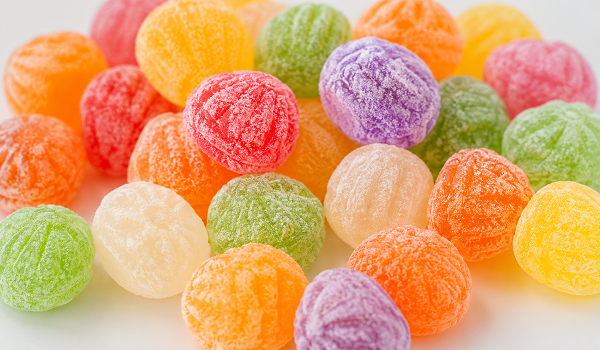
That mindset has changed sharply. Today’s consumer is not always looking to completely eliminate sugar. Instead, many are trying to reduce or moderate their sugar intake while still enjoying indulgent treats. They want chocolates, gummies, caramels, hard candies, and coated confectionery products that fit better with modern wellness goals without losing the pleasure of eating candy.
This change is reshaping the confectionery industry. Reduced-sugar products are no longer judged as health-led alternatives with room for compromise. Consumers now expect them to deliver the same quality, taste, texture, and overall eating experience as regular confectionery.
Sugar Is More Than Sweetness
One of the biggest challenges for manufacturers is that sugar plays a much larger role in confectionery than simply adding sweetness. In candy systems, sugar provides structure, bulk, stability, texture, shelf-life support, and flavour delivery.
In hard candies, sugar helps create the glassy structure and snap. In gummies, it contributes to elasticity and chew. In caramels, it supports browning, flavour development, and body. In chocolate, sugar influences mouthfeel, melt, and snap.
When sugar is reduced or removed, much of the product’s basic structure is affected. This means manufacturers cannot treat sugar reduction as a simple replacement exercise. They must rebuild the entire formulation system carefully.
The Rise of the Polyol Pivot
This challenge has led to what many formulators now describe as the “polyol pivot.” Instead of depending on one bulk sweetener, manufacturers are increasingly moving towards blended sweetener systems that can deliver better balance across taste, texture, functionality, tolerance, and cost.
For many years, erythritol became a popular choice in sugar-free confectionery because of its low calorie value, low glycaemic impact, and clean sweetness. It helped brands bridge the gap between traditional candy and modern reduced-sugar products.
However, its limitations have become more visible over time. Supply fluctuations, pricing pressure, digestive tolerance discussions, and sensory challenges have encouraged manufacturers to rethink overdependence on erythritol.
In confectionery applications, erythritol can also create technical issues. It may recrystallise over shelf life, leading to grainy textures. Its cooling effect may work well in mint products but can disturb the flavour profile of chocolate, caramel, and fruit-based candies. In some systems, it also struggles to fully match the plasticity and mouthfeel provided by sugar.
As a result, manufacturers are now looking at more balanced systems where different ingredients perform different functions instead of relying on one sweetener to do everything.
From Ingredient Substitution to System Design
The next phase of reduced-sugar confectionery is moving from substitution to system design. This has renewed interest in ingredients such as isomalt and maltitol.
Isomalt is valued for its structural stability and low hygroscopicity. It is especially useful in hard candies and products where moisture control is important for shelf life. It helps maintain stability and reduces the risk of stickiness caused by moisture migration.
Maltitol, on the other hand, offers a sweetness profile and mouthfeel closer to sucrose. This makes it useful in chocolates, coatings, chewy candies, and applications where the eating experience is critical.
By combining different polyols and sweetening systems, manufacturers can recreate more of sugar’s functionality while reducing dependence on a single ingredient. This approach allows greater flexibility in formulation and helps deliver products that meet consumer expectations on both wellness and indulgence.
Tagatose Opens a New Opportunity
Another ingredient gaining attention in reduced-sugar confectionery is tagatose. Its appeal has increased because of its treatment on the Nutrition Facts Panel, where it is no longer required to be declared as an “added sugar.”
For confectionery brands, this is a significant development. Unlike many high-intensity sweeteners, tagatose behaves more like sugar in food systems. It provides bulk, supports browning reactions, and contributes to flavour development in products such as caramel, toffee, chocolate, and baked inclusions.
This makes tagatose particularly attractive for brands that want to reduce declared added sugars without losing the sensory and functional qualities associated with traditional confectionery.
It also supports a growing middle ground in the market. Products do not have to be fully sugar-free to appeal to modern consumers. They can be significantly reduced in sugar, better aligned with wellness trends, and still offer an indulgent experience.
The Future Is Moderation and Permissible Indulgence
The future of confectionery appears to be moving away from extreme positioning. Consumers are not necessarily looking for all-or-nothing solutions. Instead, they are seeking moderation, balance, and permissible indulgence.
This means they still want treats, but they want them formulated differently. They want products that feel lighter, smarter, and more aligned with health-conscious lifestyles, without losing the joy of confectionery.
For manufacturers, this creates both opportunity and responsibility. Sugar reduction must now be approached as a complete product development strategy. It involves taste, texture, digestive tolerance, labelling, ingredient economics, supply stability, shelf life, and brand positioning.
The companies that succeed in this category will be those that treat sweetener systems as part of a broader formulation strategy rather than searching for one perfect replacement for sugar.